Why Does My Cat Bury Its Food? 6 Instincts Explained
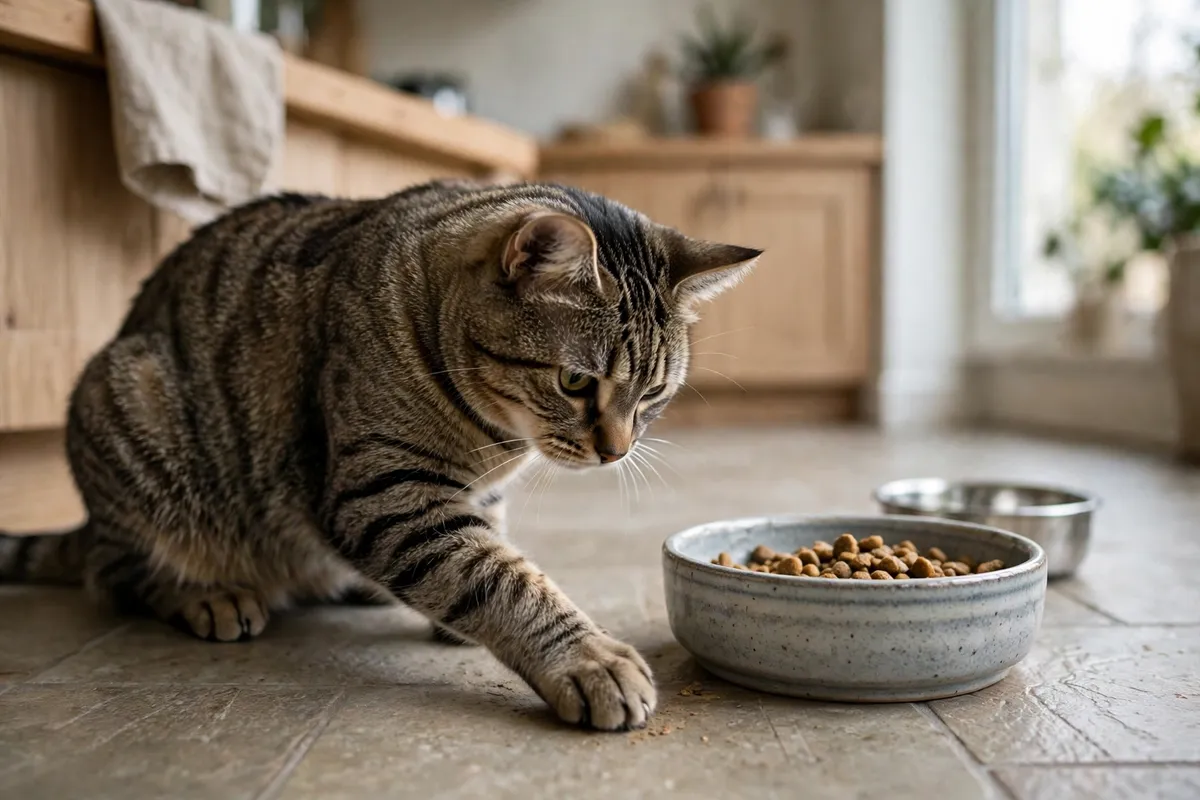
You put down a fresh bowl, and instead of eating, your cat paws at the floor around it — as if trying to bury the meal. This behavior, called food caching, is an old instinct: cats bury food to save it for later, hide its scent from rivals, reject stale food, or because stress or multi-cat competition has switched the instinct back on. Usually it is completely normal, but a sudden change is worth a closer look.
If you have watched your cat "dig" around a full bowl and wondered whether it hates the food or is just being strange, this guide explains the six instincts behind food burying, how to tell normal caching from a warning sign, and the simple changes that usually calm it down.
What Does Food Burying Look Like?
Food burying rarely involves actual dirt. In a house, it usually looks like your cat scratching or pawing at the floor beside the bowl, dragging a nearby towel or mat toward the food, or making digging motions in the air around the dish. Some cats do it before eating, as if preparing the spot. Others do it after a few bites, walking away and then returning to scratch. A few cats will even try to "cover" the bowl with a toy, a sock, or a piece of paper they have found nearby.
Think of it as the indoor version of what wild cats do outdoors: a cat that catches more than it can eat scrapes leaves or soil over the leftovers, hiding them from scavengers and keeping them for later. Your house cat has no soil, so it uses the kitchen floor, a rug, or its own paws. The motion looks odd, but the instinct is perfectly logical.
1. Saving It for Later: The Caching Instinct
The oldest explanation is also the simplest: your cat is saving food for later. In the wild, meals are unpredictable. A cat that eats its fill and then covers the rest is planning ahead, storing a meal it may need when hunting goes badly. House cats do not need to plan ahead — their next meal is guaranteed — but the instinct does not switch off just because the bowl is always full.
This is especially common with large portions of wet food: a cat that is full after a few bites may paw at the floor as if to "put the rest away." If your cat buries food mainly after eating part of a meal and returns to finish it later, caching is the likely explanation, and smaller, more frequent portions often reduce it.
2. Hiding the Scent From Rivals and Predators
A second wild instinct is scent control. Leftover food smells, and in nature, a smell can attract larger predators or competing animals. By covering food, a wild cat reduces the scent trail that might give away its location or invite a stronger animal to steal the meal. Even a confident indoor cat may still act on this programming, especially if other pets walk past the feeding area.
You may notice this more in homes with dogs, visiting cats, or heavy foot traffic near the bowl. The cat is not necessarily afraid — just cautious, as its ancestors had to be. Moving the bowl to a quieter corner often reduces the need to hide food.
3. "This Isn't Right": Dislike, Staleness, or a New Food
Sometimes burying is a review, not a storage plan. Cats are famously picky about freshness, temperature, and texture. Wet food left out for hours can dry out, pick up fridge smells, or simply go stale, and a cat may paw at it as if to cover something unpleasant. The same thing can happen with a brand-new flavor or a food served straight from the fridge, which smells weaker when cold.
Watch what happens next: a cat that sniffs, scratches, and walks away is sending a clearer message than one that scratches and then eats happily. If burying started the day you switched foods, try the previous food, warm refrigerated wet food briefly to room temperature, or serve a smaller freshly opened portion.
4. Stress, Change, or Anxiety at Home
Cats are creatures of routine, and stress often shows up first around food. A house move, a new baby, a new pet, building work, a change in your work hours, or even a rearranged kitchen can make a cat feel unsettled. Some stressed cats eat less; others eat in a hurry and then bury the bowl as if trying to make the feeding moment disappear. In both cases, the pawing is a coping behavior — a small, repetitive action that helps the cat feel more in control.
If burying started alongside a household change, give your cat time and stability: consistent feeding times, the bowl in the same spot, and a quiet retreat to use. Most cats settle back within a few weeks once home feels predictable again. If stress signs spread — hiding, over-grooming, avoiding the litter box — talk to your veterinarian.
5. Competition in a Multi-Cat Household
In homes with more than one cat, food burying can be about competition. A cat that feels rushed by a housemate may eat quickly, bury the rest, and walk away, as if to claim the food without actually guarding it. A shy cat may bury its food to avoid drawing attention while it eats. And a confident cat may bury a housemate's leftovers, too, treating the whole feeding area as territory to manage.
The fix is practical, not disciplinary: feed each cat in a separate spot, out of sight of each other, with its own bowl, plus enough water stations and resting spots that no cat must compete for basics. When cats no longer feel rushed, the burying often fades.
6. An Old Kitten Habit That Never Faded
Some cats bury food simply because they always have. Kittens learn feeding behaviors by watching their mother and littermates, and a cat that grew up in a busy litter or a shelter, where food was shared and competition was real, may carry the burying habit into adulthood. For these cats, pawing at the floor is as automatic as kneading a blanket — a comfort behavior from early life that feels good even when it serves no purpose now.
This is the hardest version to "fix," and the one that needs fixing least. If your cat has buried food for years, eats well, and holds a healthy weight, the habit is almost certainly harmless. Use an easy-to-wipe feeding mat, but do not scold the cat — scolding only adds stress, which can make burying worse.
Normal Instinct vs When to Check: A Simple Guide
Most food burying is normal, but the context tells you when to dig deeper. It is most likely normal instinct if your cat eats a healthy amount overall, keeps a stable weight, plays and grooms as usual, and has buried food for a long time or does it only with large portions. Occasional pawing after a satisfying meal, with no other changes, is rarely a reason to worry.
Check further if burying is new and sudden, or comes with appetite changes. A cat that suddenly eats much less, drops food, drools, or paws at its face may have dental pain, and burying can be its way of avoiding a painful meal. Vomiting, diarrhea, weight loss, or hiding alongside burying also deserve a veterinary visit.
What to Do: Practical Tips That Usually Help
Start with the basics, changing one thing at a time. Serve smaller portions of wet food, remove uneaten wet food after about thirty minutes, wash the bowl daily, and feed each cat separately in a calm spot away from busy doorways and other pets.
Stick to a regular feeding schedule, and avoid switching foods frequently, which can make picky behavior worse. If you do change foods, transition gradually over a week by mixing the old and new foods together. Finally, stay calm about the pawing itself. A feeding mat under the bowl catches most of the mess, and ignoring the digging — rather than reacting to it — keeps mealtimes relaxed. With fresh food, a quiet spot, and no competition, many cats bury their food far less often, and some stop altogether.
When to Call the Vet
Call your veterinarian if food burying appears together with a sudden loss of appetite lasting more than a day, noticeable weight loss, vomiting or diarrhea, drooling or difficulty chewing, bad breath that is new, or a major behavior change such as hiding or refusing to play. Kittens that stop eating need attention even sooner, since they have smaller reserves than adult cats.
When you call, mention when the burying started, whether the food or feeding spot changed, and whether other cats are involved. Those details help your vet separate a harmless instinct from a medical issue much faster.
Frequently Asked Questions
Is it normal for cats to bury their food?
Yes, in most cases it is completely normal. Food burying, also called caching, is an instinct left over from wild ancestors. As long as your cat is eating well, acting normally, and the food is fresh, pawing at the floor around the bowl is usually harmless.
Why does my cat bury its food but still eat it?
Many cats scratch around the bowl before or after eating as part of the same caching routine. They may be saving part of the meal, covering the scent, or simply following an old habit — even if they go on to finish the bowl.
Does food burying mean my cat does not like the food?
Not always, but it can be a clue. If burying starts suddenly with a new food, or your cat sniffs and walks away without eating, try a fresh serving or a different flavor. If the behavior continues with every food, look for stress or competition instead.
How do I stop my cat from burying its food?
You usually cannot — and do not need to — train out an instinct. Instead, feed smaller portions, remove uneaten wet food after 30 minutes, feed cats separately, and keep the feeding spot calm and clean. The behavior often fades on its own.
When should I call the vet about food burying?
Call your vet if burying comes with a sudden drop in appetite, weight loss, vomiting, diarrhea, drooling, mouth pain, or hiding. Those changes together can point to illness or dental pain, and they deserve a check-up.