Why Does My Cat Drink From the Tap?
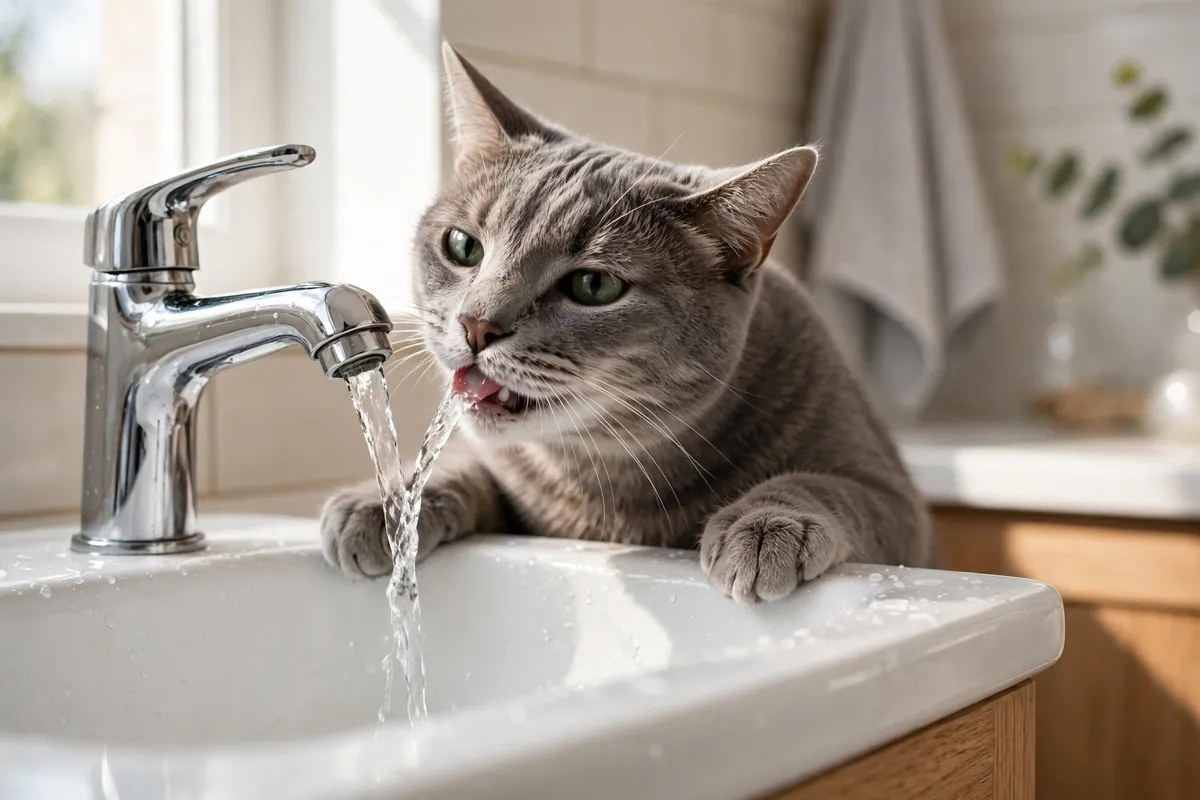
You fill the water bowl, set it down fresh, and your cat walks straight past it, jumps onto the bathroom counter, and waits by the tap. It is one of the most common cat behaviors there is, and it is also one of the most puzzling for owners. The good news is that tap drinking is almost always normal. Cats are wired to prefer moving water, and a tap gives them exactly what their instincts are looking for, in a way a still bowl never can.
The tap also solves a few problems cats have with ordinary bowls, from whiskers brushing the rim to water that has gone stale or sits too close to the food. Understanding why your cat does it helps you work with the habit instead of fighting it, and a pet water fountain can give your cat the running water it loves without you having to leave the tap on. Here is what is really going on, and how to make drinking easier for your cat.
Why Do Cats Drink From the Tap?
Cats drink from the tap for three main reasons, and they often overlap. The first is instinct: in the wild, running water is more likely to be fresh and safe than a still pool, so cats are naturally drawn to moving water. A tap that drips or runs triggers that old preference immediately. The second is freshness. Tap water is cold, oxygenated, and new, while bowl water can sit for hours, gather dust, and warm up to room temperature.
The third reason is the bowl itself. Many cats dislike the shape, depth, or placement of their water bowl, and the tap becomes the easier option. If your cat drinks from the tap but also drinks from the bowl sometimes, it is probably just a preference. If your cat refuses the bowl entirely and only drinks from taps, or starts drinking far more water than usual, it is worth looking at the bowl setup first, and then at your cat's health.
The Running-Water Instinct in Cats
A cat's attraction to running water is an old survival habit. Wild cats learn to trust water that moves, because still water is more likely to be stagnant or contaminated. Domestic cats carry that preference even though their bowl water is perfectly safe. The sound of running water catches a cat's attention, and the movement makes the water visible, which matters because cats do not see still water very well at close range.
You can see the instinct in other behaviors too. Many cats paw at the surface of their bowl before drinking, which is a way of testing the water and making it move. Some cats dip a paw in and lick the water off, which is the same idea. The tap simply does all of that work for them. It is also why so many cats are fascinated by dripping taps, showers, and even the sound of a running dishwasher. Moving water is interesting, and interesting is irresistible to a cat.
Whisker Fatigue: Is the Bowl the Problem?
Whisker fatigue is the idea that a cat's whiskers get overstimulated when they keep brushing against the sides of a narrow, deep bowl. A cat's whiskers are extremely sensitive touch organs, and pressing them against a bowl rim every time the cat drinks can be uncomfortable enough to put the cat off. Whether it is a formal condition or just a preference, the practical point is the same: many cats clearly prefer wide, shallow dishes.
Try swapping the bowl for a wide, flat dish, a large plate, or a wide ceramic bowl that lets your cat drink without its whiskers touching the sides. Glass, ceramic, and stainless steel are better than plastic, which can hold odors and cause chin irritation in some cats. If your cat starts using the new dish and visits the tap less, the bowl was a big part of the problem. If the tap is still the favorite, the running water itself is the draw, and a fountain is the next step.
Bowl Placement and Water Freshness Matter
Where you put the bowl matters almost as much as the bowl itself. Cats do not like drinking next to their food, because in the wild a water source near a kill could be contaminated. A water bowl placed right beside the food bowl is one of the most common reasons cats look elsewhere, and moving it to another room often solves the problem overnight. Cats also prefer drinking in quiet, open spots where they can see around them, rather than in a corner or a busy hallway.
Freshness is the other half of the equation. Change the water at least once a day, and twice a day in warm weather, and wash the bowl regularly so it does not develop a slimy film. Some cats will only drink water they have seen you pour, so a fresh refill in the morning and evening can make a real difference. Try placing a second bowl in a different room, ideally near a favorite resting spot, so drinking is easy wherever your cat happens to be.
Is Tap Water Safe for Cats?
In most homes in the United States, tap water is safe for cats, because it meets the same standards as the water you drink. If your tap water is safe for you, it is generally safe for your cat too. There are a few exceptions. If your home has old lead pipes, if your water comes from a private well, or if your area has a boil-water notice, use filtered or bottled water for your cat just as you would for yourself.
Some cats are sensitive to the taste of chlorine in tap water, which is another reason they may prefer a tap that has been running for a while, or water that has sat out and lost some of its chlorine smell. A simple water filter jug or a filtered pet fountain removes that taste and can make your cat more willing to drink. If you are unsure about your local water quality, your water provider can tell you what is in it, and your vet can advise whether filtering is worthwhile.
The Fountain Fix: Giving Your Cat Running Water
A pet water fountain is the simplest way to give your cat the running water it loves without leaving taps on all day. A good fountain keeps water moving, filtered, and oxygenated, which makes it more appealing to cats and encourages them to drink more. That matters, because many cats do not drink enough, and better hydration supports kidney and urinary health over a cat's lifetime.
Choose a fountain with a quiet pump, a wide drinking surface, and materials you can clean easily, such as ceramic or stainless steel. Avoid fountains with lots of small crevices, because they grow slime quickly. Clean the fountain and change the filter on schedule, and keep it in a quiet spot away from the food bowl. Most cats take to a fountain within a few days, especially if you leave the old bowl beside it at first and let your cat choose. If your cat ignores the fountain entirely, try a different style: some cats like a gentle stream, others prefer a bubbling surface.
When Tap Drinking Means a Vet Visit
Tap drinking on its own is normal, but a sudden change in how much your cat drinks is not. If your cat starts drinking far more water than usual, visits the tap constantly, or is drinking a lot and urinating a lot, book a vet visit. Increased thirst can be an early sign of kidney disease, diabetes, or hyperthyroidism, especially in older cats, and catching these conditions early makes a real difference.
Also see your vet if tap drinking comes with weight loss, a poor appetite, vomiting, or a change in litter box habits. Keep a simple note for a few days: how often your cat drinks, whether it still uses the bowl, and whether the litter box is wetter than usual. That record helps your vet judge whether the change is a harmless preference or a symptom worth investigating. A healthy cat that simply prefers the tap needs a fountain, not a vet visit, but a cat that suddenly cannot get enough water deserves attention.
Frequently Asked Questions
Is it okay for my cat to drink from the tap?
Yes, in most homes tap water is perfectly safe for cats, and drinking from the tap is normal behavior. Just make sure your cat cannot turn on a hot tap or get its head stuck, and keep the sink clean. A pet fountain is a safer long-term alternative.
Why does my cat ignore its water bowl?
Common reasons are whiskers touching the sides of a narrow bowl, the bowl sitting too close to the food, stale water, or a simple preference for running water. Try a wide shallow dish in a different room with fresh water, and see if your cat returns to it.
Do cats prefer running water?
Most cats do. Running water is fresher, cooler, and more visible to a cat than still water, and the preference comes from an old instinct that moving water is safer to drink. This is why so many cats love taps and pet fountains.
What is whisker fatigue in cats?
Whisker fatigue describes the discomfort a cat may feel when its sensitive whiskers keep brushing against the sides of a narrow, deep bowl. Using a wide, shallow dish lets the cat drink without its whiskers touching the rim, and many cats immediately drink more happily.
How much water should my cat drink a day?
A typical cat needs roughly a small cup of water a day, though the exact amount depends on size, diet, and weather, and cats eating wet food need less. What matters most is a steady pattern. A sudden, large increase in drinking is worth a vet check, especially in older cats.