Why Does My Cat Paw at the Water Bowl? 6 Reasons
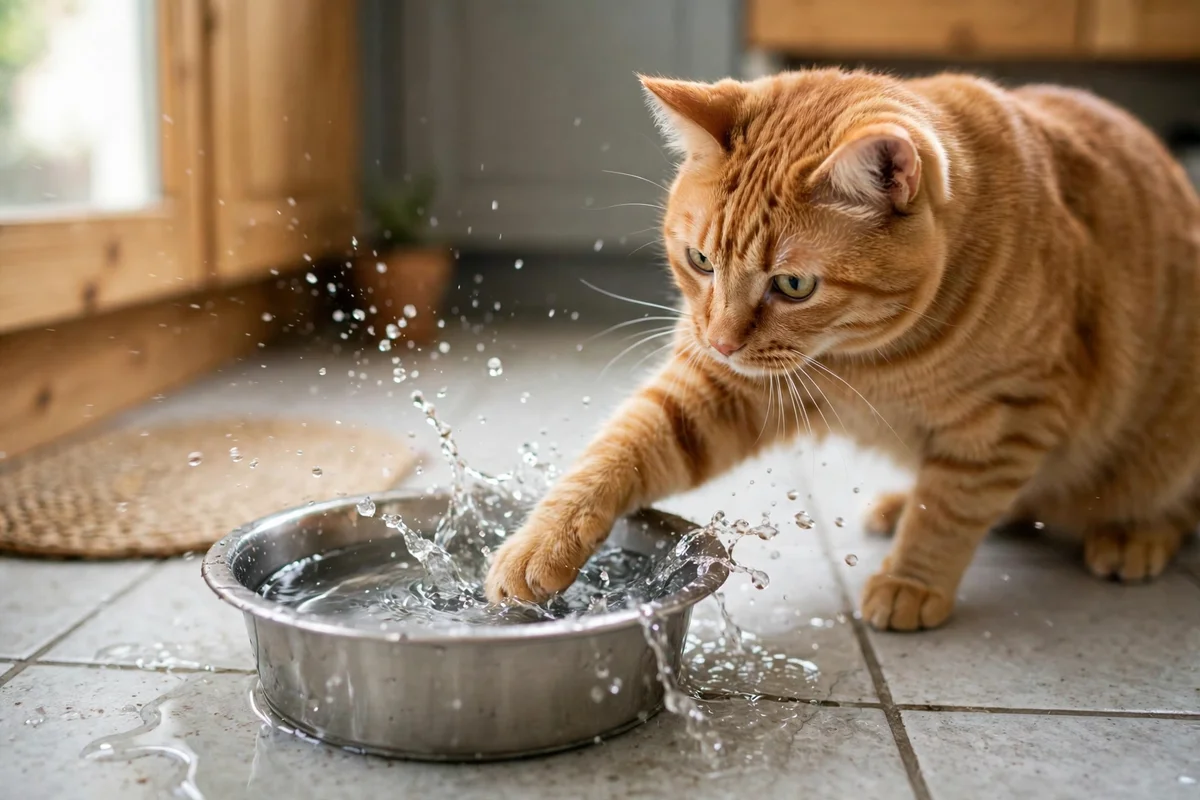
You fill the water bowl, walk away, and minutes later there is a puddle on the floor and a very pleased cat with a wet paw. Why does a cat paw at the water bowl instead of simply drinking from it? In most cases it is perfectly normal: your cat is testing the water, trying to see it better, protecting its sensitive whiskers, or simply playing. Cats experience water very differently from us, and a quick paw-dip often solves a small problem we cannot even see.
That said, pawing can also be a clue that something about the bowl is not working for your cat — it may be too deep, too narrow, or placed somewhere your cat dislikes. Here are the six most common reasons cats paw at water, and what you can do about the mess.
1. Testing the Depth: Cats Cannot Judge Still Water Well
Cats have excellent vision for movement, but still, clear water is surprisingly hard for them to see. A cat looking down into a bowl of clear water may struggle to tell exactly where the surface is, which is why a cautious cat dips a paw in first. That touch tells the cat how deep the water is and where to aim its tongue, without dunking its whole face.
This is especially common with deep bowls, glass bowls, and bowls filled right to the brim. A shallow bowl filled only partway, or a bowl with a contrasting color inside, can make the waterline easier to spot. Some owners find that a wide ceramic bowl in a light color reduces paw-testing almost overnight, simply because the water is easier to see.
2. Whisker Fatigue: The Bowl Is Too Narrow or Deep
A cat's whiskers are exquisitely sensitive touch sensors, and they brush against the sides of a narrow, deep bowl every time the cat drinks. Repeated contact can be uncomfortable — a problem often called whisker fatigue or whisker stress. A cat dealing with it may paw at the water, drink only from the center, eat from the edge of the bowl, or knock food out onto the floor first.
The fix is refreshingly simple: switch to a wide, shallow dish that lets your cat drink without its whiskers touching the sides. Stainless steel and ceramic dishes in a saucer shape work well, and they are easy to clean too. If the pawing stops after the bowl change, whisker fatigue was very likely part of the story. If it continues, one of the other reasons below is probably at play.
3. A Preference for Moving Water
Many cats are drawn to moving water, and pawing is one way to create it. In the wild, running water is often fresher and safer than a stagnant pool, so cats have an instinctive pull toward ripples, drips, and streams. A cat that paws its bowl may be trying to make the water move — and once it ripples, the water also becomes easier to see and more interesting to drink.
This is also why so many cats beg to drink from a running tap or bat at a dripping faucet. A pet water fountain is the practical answer: it keeps water circulating, filtered, and oxygenated, and it satisfies that moving-water instinct without soaking your kitchen floor. Many cats that pawed daily at a bowl drink far more calmly from a fountain, which is a bonus for hydration.
4. Play Instinct: Water Is Simply Fun
Sometimes there is no deeper mystery — your cat is playing. Kittens are the worst offenders, batting at ripples, chasing drips, and splashing with total delight, but playful adults do it too, especially high-energy breeds. Water moves, sparkles, and reacts when touched, which makes it a perfect toy from a cat's point of view.
Play-pawing is easy to recognize: the cat looks relaxed and engaged, ears forward, body loose, often followed by a happy shake of the paw or a dash across the room. It is not a problem unless the mess bothers you. A heavy, tip-proof bowl on a waterproof mat, or a second "play" water station outside, can contain the fun. Scolding rarely helps — the cat is not being naughty, and punishment may just make it wary of drinking near you.
5. Curiosity and Habit: They Learned It Works
Cats are quick learners, and pawing can become a habit simply because it once paid off. A cat that dipped a paw, made a splash, and got your attention — even surprised laughter — may repeat the trick. Other cats copy what they see: a kitten raised around a paw-dipping mother often grows up doing the same thing.
Habitual pawing is harmless in itself. If you want to reduce it, stay calm and boring about the splashing, keep the bowl setup comfortable, and offer an alternative outlet for the same curiosity, such as a fountain or a supervised play session with water toys. The goal is not to train the quirk out of your cat, but to make drinking easy enough that the paw becomes unnecessary.
6. Discomfort, Taste, or Something in the Water
Occasionally, pawing is a complaint about the water itself. A bowl that has not been washed may carry a faint film or taste, stale water left for days can taste flat, and a bowl placed next to the food dish can collect crumbs that put some cats off. Cats with sensitive noses may also object to a strongly scented cleaning product left on the bowl.
Fresh water daily, a thorough wash of the bowl, and a spot away from the food dish and the litter box will rule out most of these issues. Some cats also prefer filtered or cooled water, so experimenting with a clean ceramic bowl in a quiet corner is worth trying before assuming the behavior is just a quirk.
How to Reduce the Splashing Without Stressing Your Cat
You do not need to stop the pawing entirely — you just need a setup that works for both of you. Start with a wide, shallow, heavy bowl on a waterproof mat, placed in a quiet spot away from food and litter. Refresh the water at least once a day and wash the bowl properly. If your cat loves moving water, try a fountain. And if the pawing is mostly play, give your cat a daily play session with a wand toy so some of that energy goes elsewhere.
Watch what changes. If a bowl swap ends the splashing, the problem was the bowl. If a fountain ends it, your cat wanted moving water. If nothing changes and your cat still drinks normally, you probably just have a playful cat — and a mat under the bowl is the cheapest peace treaty available.
When to See a Vet About Pawing at Water
Pawing on its own is rarely a medical concern, but pair it with other changes and it is worth a check. Contact your vet if your cat suddenly drinks much more or much less than usual, paws at water but seems unable to drink, vomits, loses weight, becomes lethargic, or has trouble urinating. These signs can point to mouth pain, kidney issues, diabetes, or urinary problems, and early attention matters far more than the puddle on the floor.
For more everyday cat quirks, explore our Cat Behavior guides and return to the Purrfect Paws homepage for the latest articles.
Frequently Asked Questions
Why does my cat dip its paw in water before drinking?
Most often it is testing the water: checking the depth, making it move so it is easier to see, or avoiding whisker contact with a narrow bowl. A wide, shallow bowl or a fountain usually reduces the pawing.
Is pawing at water a sign of whisker fatigue?
It can be. If a narrow bowl presses your cat's whiskers against the sides, your cat may paw at the water or eat from the edge instead. Switching to a wide, shallow dish often helps.
Do cats paw at water because they like moving water?
Yes, many cats prefer moving water. In the wild, running water is often fresher than still water, so cats are drawn to ripples and drips. A pet water fountain satisfies this instinct without the puddles.
Is it normal for cats to play with water?
Yes, especially for kittens and playful breeds. Splashing, batting ripples, and chasing drips are normal play behavior, as long as your cat is also drinking normally and seems healthy.
When should I worry about my cat pawing at water?
See a vet if pawing comes with drinking much more or less than usual, vomiting, lethargy, weight loss, or trouble urinating, as these can signal illness rather than a quirky habit.