Why Does My Cat Eat Plastic?
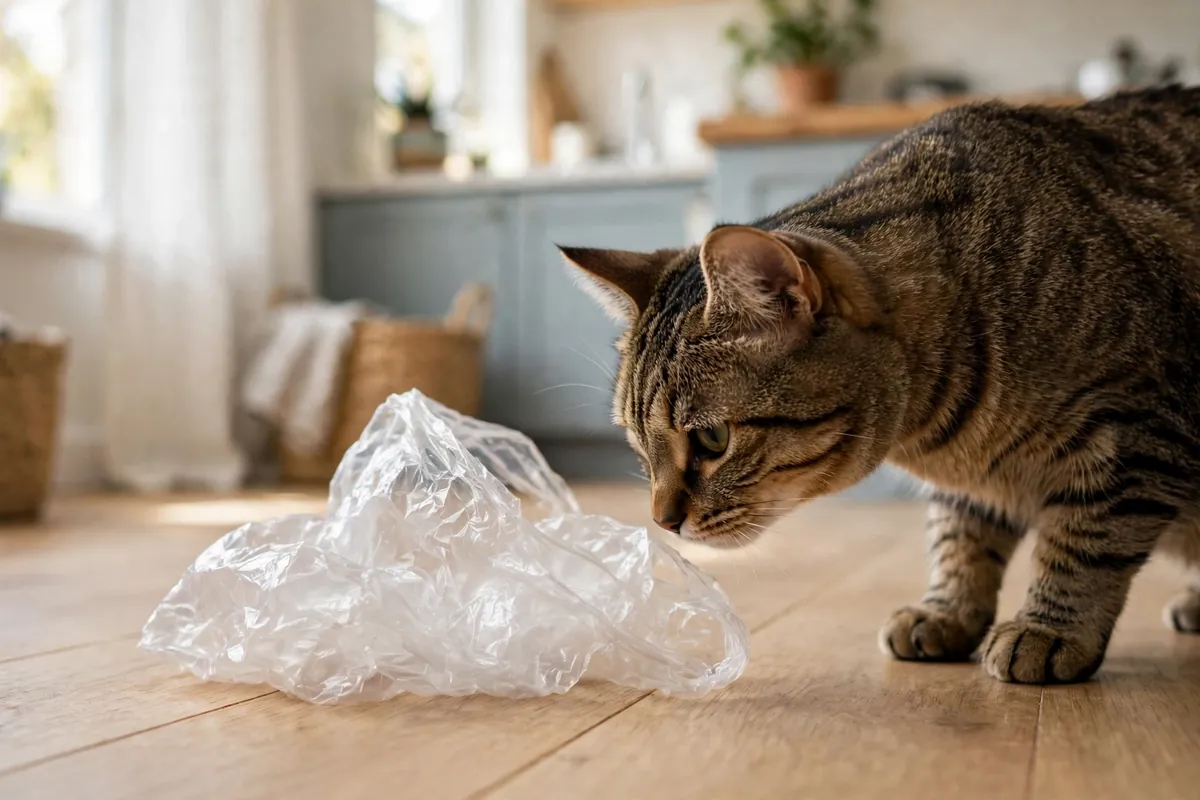
If you have ever heard that unmistakable crinkling sound at 2 a.m., only to find your cat chewing on a grocery bag, you are not alone. Many cats are drawn to plastic bags, wrappers, shower curtains, and packaging, and some go beyond licking or chewing to actually swallowing pieces. It looks strange, and it can be worrying, because while a quick nibble is usually harmless curiosity, repeated plastic eating can be a sign of something deeper, and swallowed plastic can cause a dangerous blockage.
Most cats that eat plastic fall into two groups: curious cats that love the texture, sound, and smell of plastic, and cats with pica, a compulsive urge to eat non-food items. The fix depends on which group your cat is in, so this guide walks through the difference, the common causes, the real dangers, and the practical steps that stop the habit, including when a vet visit is needed.
Why Do Cats Eat Plastic? The Short Answer
Cats eat plastic for a mix of reasons, and most of them are surprisingly ordinary. Plastic bags crinkle in a way that excites a cat's hearing, they are often coated with animal fats or food smells from manufacturing and packaging, and they feel interesting against teeth and whiskers. For a bored indoor cat, a plastic bag is basically a free toy that rustles, moves, and smells faintly of dinner.
Some cats are also drawn to specific plastics. Bags that held meat, bread, or cheese carry food odors that a cat can smell long after you have emptied them. Wool and lanolin-based plastics can attract cats too, because lanolin smells faintly like animal fat. A cat that licks a bag once and walks away is usually just investigating. A cat that returns to the same bag again and again, or chews through packaging to get at the plastic itself, is showing a stronger drive that deserves a closer look.
Pica vs. Curiosity: How to Tell the Difference
Curiosity is the normal version. A curious cat bats a bag around, licks it a few times, maybe takes a small bite, and then loses interest when something better comes along. The behavior is occasional, it happens mostly with new or interesting items, and it stops when you remove the bag or offer a toy. Curious cats do not usually swallow large pieces, and they do not seek plastic out every day.
Pica is different. Pica is a compulsive urge to eat things that are not food, and in cats it most often targets plastic, wool, fabric, and rubber. A cat with pica eats plastic regularly, seeks it out, and keeps going even when you offer alternatives. The behavior often starts in kittenhood or after a stressful change, and it can persist for years. Oriental breeds, including Siamese cats, are more prone to pica than other breeds, though any cat can develop it. If your cat swallows plastic every week, that pattern points toward pica rather than simple curiosity.
Boredom and Anxiety: The Emotional Side of Plastic Eating
For many cats, plastic chewing is a coping habit, much like a person biting their nails. Indoor cats with little to do can turn to the nearest interesting object, and plastic bags are everywhere in a home. A cat that spends long hours alone, with no window perch, no play sessions, and no puzzle feeders, may chew plastic simply because it is the most stimulating thing available.
Anxiety plays a role too. Cats that are stressed by a new pet, a move, loud building work, or a change in routine sometimes develop repetitive chewing as a way to soothe themselves. Watch for the pattern: does your cat chew plastic more when you are away, after a stressful event, or when the household is noisy? If the chewing clusters around stressful moments, the root cause is emotional, and the fix is calming the cat and enriching the environment, not just hiding the bags.
Nutrient Gaps: Could Diet Play a Role?
Diet is the least common cause of plastic eating, but it is worth ruling out, especially if the habit started suddenly in an adult cat. Cats that are missing fiber, certain minerals, or enough calories can develop odd cravings, and some cats chew non-food items when their diet is low quality or poorly balanced. A cat that has recently switched foods, or one that is on a very restrictive diet, deserves a dietary review.
That said, do not try to fix plastic eating by adding supplements on your own. Guessing at vitamins or minerals can do more harm than good, and most cats that chew plastic are eating a perfectly adequate diet. The right move is a vet check and a look at the food label together: a complete and balanced food, fed in the right amount, removes diet from the list of suspects. If your vet finds a genuine deficiency, they can recommend a specific change rather than a guess.
Why Eating Plastic Is Dangerous for Cats
The biggest danger of eating plastic is a blockage. Unlike food, plastic does not break down in the stomach. A swallowed piece can lodge in the intestines and stop food from passing, which is a medical emergency that usually needs surgery. Thin plastic bags are the most common culprit, but hard plastic, rubber bands, and packaging tape are dangerous too, and string-like items such as ribbon and dental floss are especially risky because they can cut into the gut as the intestines move.
There are other risks as well. Some plastics contain chemicals that can irritate the mouth and stomach, and bags that held cleaning products or chemicals can carry residues that are toxic. Even a cat that only chews can hurt itself: sharp edges can cut the gums or tongue, and a cat that gets its head stuck in a bag handle can panic and injure itself. If your cat swallows a piece of plastic larger than a coin, or shows vomiting, loss of appetite, or lethargy afterward, treat it as urgent.
How to Stop Your Cat Eating Plastic: Removal and Enrichment
The first step is simple but non-negotiable: remove the temptation. Store plastic bags in a closed cupboard or a drawer with a latch, never hanging on a hook where a cat can reach them. Take bin bags out promptly, keep packaging out of reach, and cut the handles off any bags before you throw them away, so a cat that does find one cannot get its head caught. Check the laundry room too, because plastic laundry bags are a common target.
The second step is to replace the habit with something better. Give your cat the sensory payoff it is looking for in a safe form: crinkle toys made for cats, paper bags with the handles cut off for play, and puzzle feeders that keep the mind busy. Add two short play sessions a day, a window perch, and a scratching post, and many cats lose interest in plastic within a few weeks. If the chewing continues despite all of this, or if it is clearly compulsive, talk to your vet about behavior support, because pica sometimes needs more than environmental changes.
When to Call the Vet About Plastic Eating
Most plastic chewing is a behavior problem, not a medical emergency, but some situations need a vet right away. Call your vet immediately if your cat has swallowed a piece of plastic and is vomiting, refusing food, straining in the litter box, drooling, or acting lethargic or in pain. Do not try to make your cat vomit at home, and do not pull on string or ribbon coming from your cat's mouth or rear, as this can cause serious internal injury.
Book a routine vet visit if the plastic eating is frequent or compulsive, if it started suddenly in an adult cat, or if it comes with weight loss, a dull coat, or changes in appetite or litter habits. Your vet can check for nutritional problems, dental pain, or digestive issues, and can help you work out whether the behavior is pica, anxiety, or simple boredom. Bring a note of how often it happens and what your cat targets, as that detail helps the vet judge how serious it is.
Frequently Asked Questions
Is it normal for cats to chew on plastic bags?
Occasional licking or chewing is common and usually just curiosity, especially in young cats. It becomes a concern when a cat seeks plastic out daily, swallows pieces, or cannot be distracted from it. That pattern is more likely pica or anxiety, and it is worth discussing with your vet.
Why does my cat like licking plastic bags?
Plastic bags often carry faint food smells, animal fats from manufacturing, or lanolin, all of which attract cats. The crinkly texture and sound are stimulating too. Licking alone is usually harmless, but watch that your cat does not start biting off and swallowing pieces.
Can a cat pass a small piece of plastic?
Small, soft pieces sometimes pass on their own, but there is no safe size to assume. Hard, sharp, or string-like plastic can cause a blockage or internal injury. If your cat swallowed plastic, watch for vomiting, appetite loss, or lethargy, and call your vet if any of these appear.
How do I stop my cat from eating plastic?
Remove all plastic from reach, cut bag handles before disposal, and offer safe alternatives such as crinkle toys and puzzle feeders. Add daily play and enrichment to reduce boredom. If the habit is compulsive and continues despite these changes, ask your vet about pica and behavior support.
Are some cat breeds more likely to eat plastic?
Yes, Oriental breeds such as Siamese cats are more prone to pica, including wool and plastic eating, than other breeds. The tendency is thought to be partly genetic. Any cat can develop pica, though, especially after stress or in a boring indoor environment.