Why Does My Cat Follow Me Everywhere?
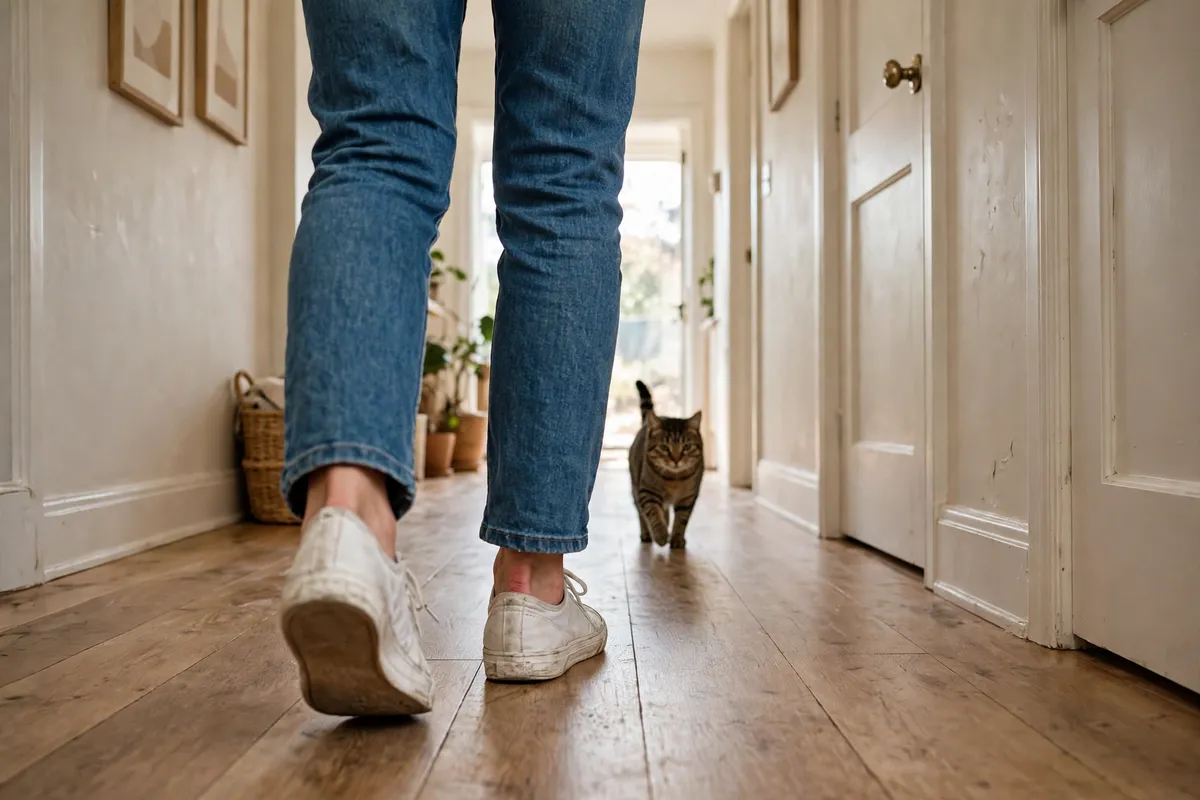
If you cannot walk to the kitchen without a small shadow trotting behind you, you are not alone — and you are not imagining it. Many cats follow their owners from room to room, wait outside closed doors, and reappear the moment you stand up. It can feel flattering, funny, and occasionally a little much, especially at 3 a.m. when your shadow wants company.
The truth is that following is rarely about one single reason. Cats follow for affection, for food, for routine, for curiosity, and sometimes because they are anxious or unwell. Understanding which reason fits your cat helps you enjoy the companionship, set gentle boundaries where you need them, and spot the times when shadowing is actually a call for help.
1. You Are Their Person
The simplest reason is also the most common: your cat likes you. Cats form strong attachments to their people, and while they show it differently from dogs, following is one of their clearest signs of affection. A cat that follows you, sits near you (not necessarily on you), slow-blinks at you, and headbutts you when you stop is a cat that considers you safe company. This is especially true for cats raised around people from kittenhood, and for breeds known for being social, like Siamese, Burmese, and Ragdolls.
In the wild, cats are both predators and prey, and resting near a trusted companion is a safety strategy. Your home is your cat's territory, and you are the most interesting, warm, and reliable feature in it. Following you is, in cat terms, hanging out with a friend — and the fact that your cat chooses your company over an empty room is a genuine compliment.
2. Routine, Food, and the Kitchen Magnet
Cats are masters of routine, and they learn your patterns faster than you learn theirs. If you usually feed them after you visit the kitchen, they will follow you to the kitchen. If you sit down to work at a certain time, they will arrive for lap time on schedule. Much of what looks like devotion is, honestly, excellent timekeeping — and there is nothing wrong with that. A cat that follows you to the kitchen at 6 p.m. every day has simply learned when dinner happens.
Watch for the pattern: does your cat follow you everywhere, or mainly toward the kitchen, the treat cupboard, and the door at walk time? If the following clusters around food and play, it is routine-driven. You can test it by changing the routine — feed at a different time for a few days and see whether the shadowing shifts. Either way, a predictable feeding and play schedule reduces frantic following, because the cat learns that good things arrive on time without needing to herd you there.
3. Curiosity and Territory Patrol
Cats patrol. In a home, your movement is the most interesting thing happening, and a cat that follows you is partly just checking what changed. Did you open a door? Move a bag? Bring in a new smell from outside? To a cat, following you is how it keeps its mental map of the territory up to date. This is why cats often follow you into rooms they have already explored a hundred times — they are not lost, they are supervising.
This kind of following is relaxed: the cat trails a few steps behind, pauses to sniff, maybe sits in the doorway rather than crowding you. It is most common in confident, curious cats and in younger cats who are still learning the house. Giving your cat its own enrichment — window perches, puzzle feeders, vertical space, and a daily play session — often reduces patrol-following, because a cat with its own interesting things to do does not need to audit your every move.
4. Anxiety, Insecurity, and Clinginess
Following can also be a sign that your cat feels insecure. After a move, a new pet or baby, building work, or a change in your schedule, some cats become Velcro cats, sticking to their person because the world feels unpredictable. Anxious following looks different from relaxed following: the cat stays very close, may vocalize when you leave the room, hides when visitors come, and may over-groom or eat less. Rescue cats and cats that were separated from their mothers early are more prone to this pattern.
If anxiety is the driver, the fix is patience and predictability, not punishment. Keep feeding, play, and bedtime on a steady schedule, provide hiding spots and high perches so your cat can feel safe without being on you, and use calm, brief departures rather than long emotional goodbyes. Never punish a cat for following you — it will only increase the insecurity. If the clinginess is severe, with destructive behavior or self-harm from over-grooming, talk to your vet about anxiety management options.
5. When Following Means Something Is Wrong
A sudden change in following behavior deserves attention. A normally independent cat that suddenly shadows you everywhere, or a cat that follows you while also eating less, drinking more, hiding more, or using the litter box differently, may be unwell or in pain. Cats often seek their person when they feel vulnerable, and a new pattern of clinginess is one of the subtlest early signs of illness, especially in senior cats.
Also watch for following paired with vocalizing, restlessness at night, or a cat that follows you and then seems distressed rather than settled. Hyperthyroidism, high blood pressure, cognitive decline in older cats, and pain from arthritis or dental disease can all change behavior before they show obvious physical signs. If the change is sudden or comes with any other symptom, book a vet check — a behavior change is a valid reason for a visit, not an overreaction.
Enjoying It Without Being Overrun
If your cat's following is healthy and affectionate, you can enjoy it and still keep your space. Acknowledge your cat when it arrives — a brief word and a stroke — then carry on; cats that are ignored completely sometimes escalate to meowing or tripping you, while cats that get a tiny acknowledgment often settle nearby. Schedule a dedicated play session each day, ideally before bed, so your cat's social and hunting needs are met on purpose rather than by ambush.
Set gentle boundaries with closed doors when you need them, and give your cat an appealing alternative spot near you — a bed on your desk, a perch by the sofa — so it can be close without being underfoot. And accept the compliment: a cat follows the person it trusts. In a species famous for independence, being chosen as the favorite human is no small thing.
Why does my cat follow me to the bathroom?
Bathrooms are small, warm, and full of interesting smells and running water — and cats dislike closed doors in their territory. Your cat is usually supervising, not being rude, and the bathroom routine is part of its daily patrol.
Is it bad if my cat follows me everywhere?
No, if the cat is otherwise healthy and relaxed. It is a sign of attachment. It only becomes a concern if the following is new and sudden, anxious, or paired with other behavior or health changes.
Why does my cat follow me but not my partner?
Cats often pick a favorite person based on who feeds them, plays with them, and respects their space. It is not a judgment on the other person — it is usually about routine and who the cat has bonded with most.
How do I stop my cat following me all the time?
You cannot and should not stop affection, but you can reduce it with a predictable routine, daily play, enrichment like window perches and puzzle feeders, and a cozy spot near you so the cat can be close without trailing you.
Should I worry if my older cat suddenly becomes clingy?
Yes, a sudden behavior change in a senior cat is worth a vet visit. Pain, hyperthyroidism, high blood pressure, and cognitive decline can all make an older cat seek its person more, and early checks catch these sooner.