Why Does My Cat Hide All Day? 7 Reasons
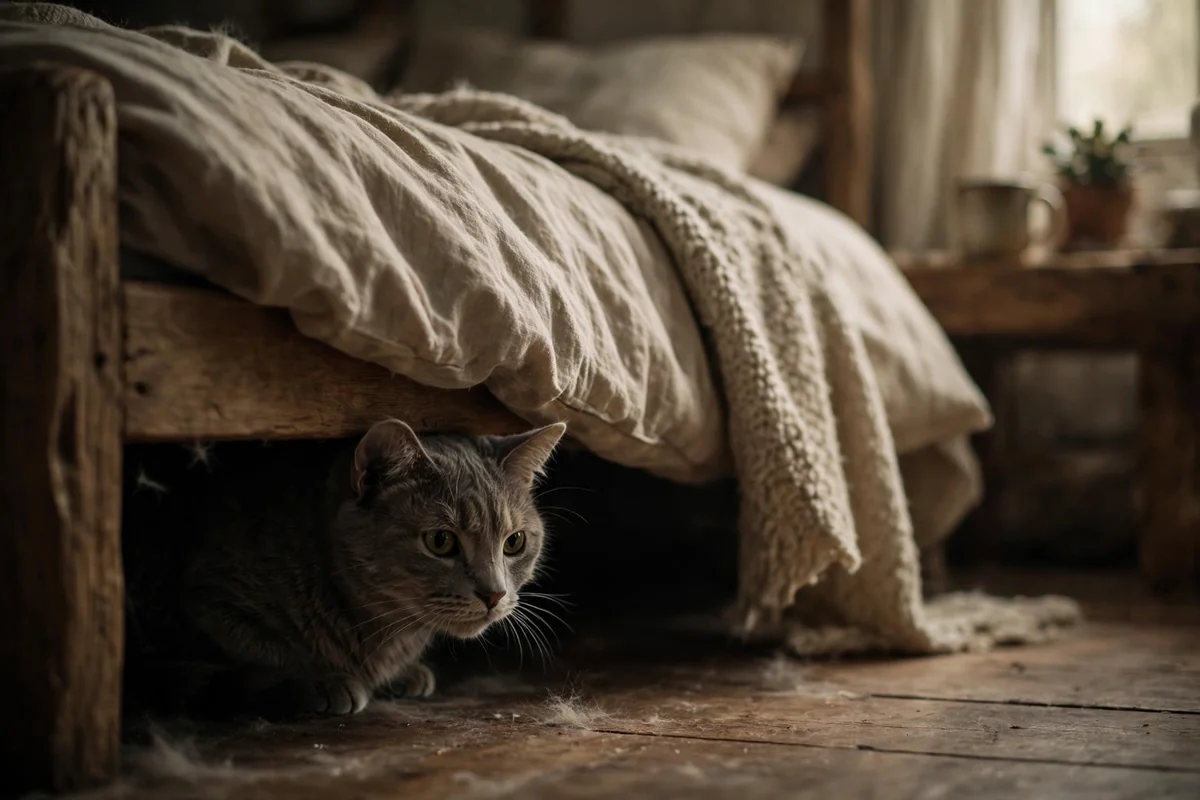
It is worrying when a cat you used to see curled on the sofa suddenly vanishes for hours, and the only sign of them is a pair of eyes under the bed. In most cases, hiding is a normal cat coping strategy, not rejection: cats are both predators and prey animals, and a quiet, enclosed spot feels safe when the world feels uncertain. The seven most common reasons are a new home or guests, loud noise, tension with other pets, pain or illness, general stress, a naturally shy personality, and old age — and most of them improve once you understand which one applies to your cat.
The key question is whether the hiding is new, whether your cat still eats, drinks, and uses the litter box, and whether it is getting better or worse over days. This guide walks through each reason, shows how to tell ordinary hiding from a real problem, and gives you gentle, practical ways to help your cat feel safe again. For more feline behavior explained, see our cat behavior guides on Purrfect Paws.
7 Reasons Your Cat Hides All Day
1. A new home, or new people in it. Moving house is one of the biggest stressors in a cat's life: every smell, sound, and hiding spot is unfamiliar. Guests have a similar effect — a house full of strangers, especially loud or excitable ones, can send even a confident cat under the bed for the evening. New cats often hide for days after adoption while they map the home at night, when it is quiet. This kind of hiding usually fades steadily as the cat learns the house is safe.
2. Loud noise and commotion. Thunderstorms, fireworks, vacuum cleaners, building work, and even a slamming door can trigger a dash to cover. Cats hear far better than we do, so sounds we barely notice can feel overwhelming to them. If your cat only hides during noisy events and returns to normal once things quiet down, noise is almost certainly the trigger. A predictable quiet room with the curtains drawn during storms or fireworks helps a lot.
3. Tension with other pets. A new dog, a new cat, or a neighborhood cat staring through the window can make a resident cat retreat. Hiding in multi-pet homes is often about avoiding confrontation: the cat chooses the closet over a hallway standoff. Watch for related signs like eating only when the other pet is absent, avoiding certain rooms, or tension around litter boxes and food bowls. Separate resources and slow, scent-first introductions usually ease this kind of hiding over time.
4. Pain or illness. This is the reason to take most seriously. Cats instinctively hide when they feel unwell, because in the wild a sick animal is vulnerable. A cat that suddenly starts hiding after years of being social — especially if it also eats less, grooms less, moves stiffly, or avoids the litter box — may be in pain or sick. Urinary problems, dental pain, arthritis, and infections can all show up first as hiding. Sudden hiding is always worth a vet call.
5. Stress and anxiety. Beyond single events, ongoing stress keeps cats in hiding: a changed work schedule, a new baby, redecorating, a family member leaving, or even a moved litter box can unsettle a sensitive cat. Stressed cats may also over-groom, eat less, or spray. The pattern to look for is hiding that tracks with household changes and lifts when life settles down. Routine is the antidote — regular feeding times, play sessions, and quiet company rebuild a cat's sense of predictability.
6. A shy personality. Some cats are simply introverts. A shy cat may adore its one or two favorite people, sleep on their bed at night, and still vanish the moment the doorbell rings. This is temperament, not a problem to fix. Shy cats often have one beloved hiding spot — a closet shelf, a box, the space behind the sofa — and they come out on their own schedule, often in the evening. Respecting that rhythm, rather than forcing sociability, usually makes a shy cat bolder over time.
7. Old age and its challenges. Senior cats hide more for several gentle reasons: arthritis makes jumping and climbing painful, failing eyesight or hearing makes the world confusing, and age-related cognitive changes can cause disorientation. An older cat may retreat to a single warm, low, easy-to-reach spot and stay there most of the day. Ramps or steps to favorite places, night-lights, and a vet check for arthritis or cognitive decline can make a senior cat's world feel manageable again.
Normal Hiding vs. a Problem: How to Tell
Normal hiding has a pattern you can live with. Your cat comes out to eat, drink, and use the litter box, even if only when the house is quiet. They still play or accept affection at least sometimes, and the hiding is stable or slowly improving.
Hiding becomes a problem when it is a sudden change, when it keeps getting worse instead of better, or when it comes with other changes: not eating for more than a day, not drinking, avoiding the litter box, vomiting, diarrhea, limping, heavy breathing, or a dull, unkempt coat. A cat that hides and refuses to come out even for food, or that hides in an unusual place like the bathtub or a cold corner, needs attention promptly.
How to Help a Hiding Cat Feel Safe
Start with safe spaces, not forced socializing. Make sure your cat has several enclosed, comfortable hiding options in quiet parts of the house — a covered bed, a cardboard box with a blanket, a closet shelf with a cushion — so hiding is a choice, not a desperate scramble. Put food, water, and a litter box within easy reach of the main hiding spot, especially for a new or frightened cat, so they do not have to cross a scary open room to meet basic needs.
Next, keep a steady routine. Feed, play, and spend quiet time with your cat at the same times each day, and keep your voice and movements calm around them. Sit near the hiding spot and read or talk softly, letting your cat approach you — and reward every brave step with a treat or gentle praise. Never drag a cat out of hiding: it destroys trust and teaches the cat to find a better, less reachable hiding place next time.
For introductions, go slowly. A new pet or person should be introduced by scent first — swapped blankets, feeding on opposite sides of a closed door — then by brief, supervised sightings, and only then by shared space. For visitors, a simple house rule helps shy cats enormously: ignore the cat, avoid direct eye contact, and let the cat decide whether to say hello. A feline pheromone diffuser in the cat's main room can also take the edge off anxiety while these steps take effect.
Red Flags: When Hiding Means a Vet Visit
Book a vet appointment promptly if you notice any of the following alongside hiding: no food for more than 24 hours (12 hours for a kitten), no water, straining or crying in the litter box, vomiting or diarrhea, limping or difficulty jumping, labored breathing, discharge from eyes or nose, or a sudden change in a senior cat's behavior. Hiding plus any of these signs should not wait for a "see how it goes" week.
At the vet, describe when the hiding started, what else changed, and whether your cat is still eating and drinking — those details help enormously with diagnosis. In many cases the vet will rule out pain or illness quickly, and then you can focus on behavior with real peace of mind. Remember: calling the vet about hiding is never an overreaction. Cats hide illness so well that a behavior change is often the earliest clue you will get.
Frequently Asked Questions
Is it normal for a cat to hide all day?
It can be, especially for a new, shy, or senior cat, or after a household change. Hiding becomes a concern when it is a sudden change, lasts more than a few days without improvement, or comes with not eating, not drinking, or not using the litter box.
Should I pull my cat out of its hiding spot?
No. Dragging a cat out of hiding destroys trust and increases stress. Instead, sit nearby, speak softly, and let your cat come out on its own. Reward brave steps with treats and calm attention.
How long does it take a new cat to stop hiding?
Many new cats start exploring within a few days, but shy cats can take two to four weeks to feel fully at home. A quiet safe room, a steady routine, and slow introductions to the rest of the house help most cats settle faster.
Why does my cat hide from visitors but not from me?
Cats bond with familiar people and are wary of strangers. Hiding from guests while being relaxed with family is normal. Give visitors a simple rule: ignore the cat, avoid eye contact, and let the cat approach if it wants to.
When does hiding mean I should call the vet?
Call the vet if hiding starts suddenly, lasts more than 48 hours with no eating or drinking, or comes with vomiting, diarrhea, limping, breathing trouble, or any sign of pain. Hiding combined with appetite or litter box changes always deserves a veterinary check.