Why Does My Cat Open Its Mouth and Stare?
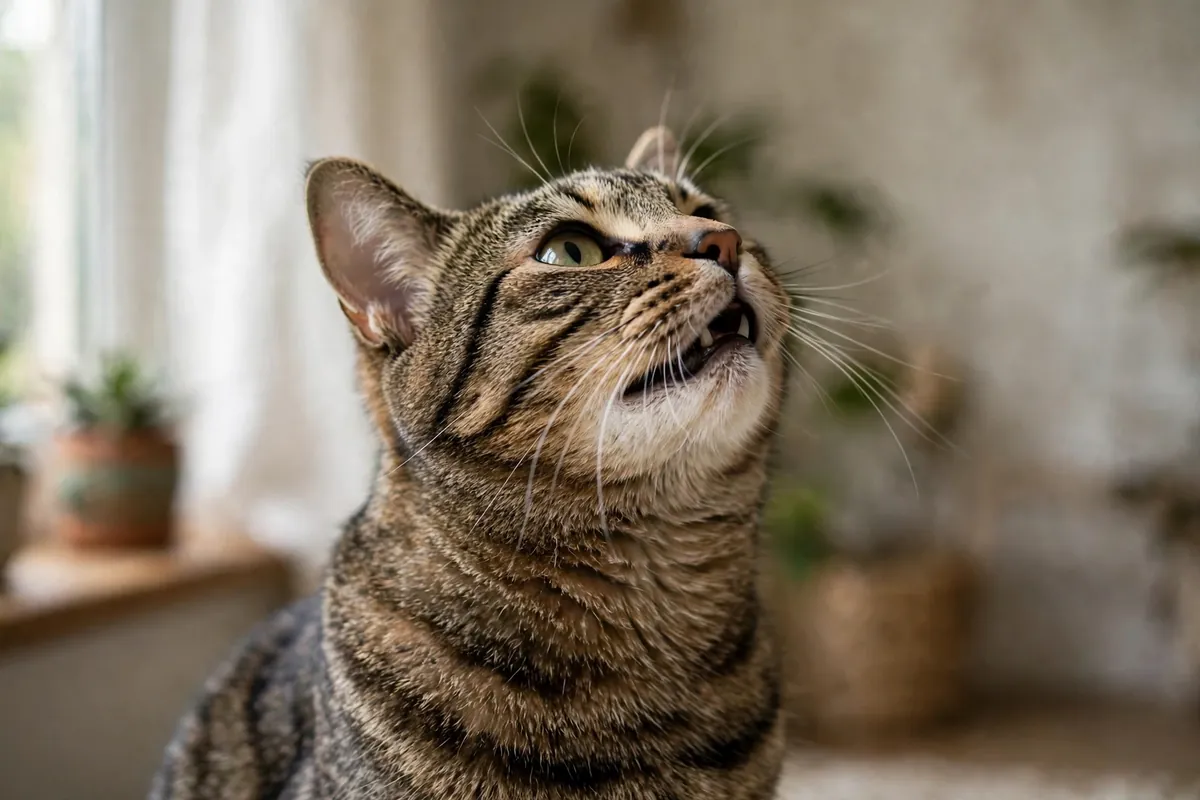
Your cat sniffs something, freezes, and then opens its mouth slightly, curls back its upper lip, and stares into the distance with a strange, almost disgusted expression. It looks like your cat has smelled something awful, or is about to hiss. In almost every case, it is neither. Your cat is doing the flehmen response, a special way of tasting the air to analyze a scent in detail, using a scent organ in the roof of its mouth called the Jacobson's organ.
The flehmen response is completely normal, and it is one of the most interesting things cats do. It helps your cat read chemical messages left by other cats, check out new smells in the home, and gather information you cannot even detect. This guide explains what the flehmen response is, how the Jacobson's organ works, which scents trigger it, and how to tell it apart from panting, which is a different matter entirely.
What Is the Flehmen Response in Cats?
The flehmen response is a behavior cats share with horses, goats, and many other animals. Your cat opens its mouth, curls back the upper lip, and holds still for a few seconds, sometimes with the head raised and the eyes half closed. The curled lip and open mouth look odd, but they have a purpose: they draw air and scent particles up into a small scent organ in the roof of the mouth, the vomeronasal organ, also known as the Jacobson's organ.
Once the scent reaches that organ, it is analyzed in a way that the regular nose cannot manage. The Jacobson's organ is tuned to pheromones and other chemical signals, the invisible messages animals leave behind. Think of it as your cat opening a second, more detailed sense of smell. The whole thing lasts only a few seconds, and then your cat closes its mouth and carries on as if nothing happened.
How the Jacobson's Organ Works in Cats
The Jacobson's organ sits in the roof of your cat's mouth, just behind the front teeth, with two small ducts that open into the mouth and the nose. When your cat does the flehmen grimace, it traps scent molecules in the mouth and pumps them up through those ducts to the organ. Nerve signals then travel to the part of the brain that handles scent and social behavior, giving your cat a detailed reading of the chemical message.
This organ is far more sensitive than the regular nose for certain kinds of scent, especially pheromones, the chemical signals cats use to mark territory, signal readiness to mate, and identify each other. A sniff tells your cat that something is there. The Jacobson's organ tells your cat who left it, how long ago, and what it means. That is why your cat pauses and looks so focused during the flehmen response: it is reading a message written in scent.
What Scents Trigger the Flehmen Response in Cats?
The most common trigger is the scent of another cat. A cat that sniffs a spot where another cat has sprayed, rubbed, or slept will often follow up with the flehmen response to read the full message. This happens with your shoes, too, since shoes carry scents from outside, including the urine marks and scent glands of neighborhood cats. That is why so many cats do the funny open-mouth face after sniffing their owner's shoes.
New smells in the home can trigger it as well: a new piece of furniture, a bag of groceries, a guest's coat, or a new cat in the house. Male cats do it more often, especially around the scent of a female cat, but females do it too. You may also see it after your cat sniffs catnip or another cat's bedding. In every case, the trigger is a scent worth analyzing, and the flehmen response is your cat's way of getting the full story.
Flehmen Response vs Panting: How to Tell the Difference
The flehmen response and panting can look similar at a glance, because both involve an open mouth, but they are very different. During the flehmen response, your cat holds still, curls its lip, and looks focused or even dazed for a few seconds, then closes its mouth and goes back to normal. The breathing stays calm, and the cat looks curious, not distressed.
Panting is faster, harder breathing with the mouth open and the tongue sometimes visible, and it usually comes with restlessness, a tense body, or hiding. Cats do not pant the way dogs do, so panting in a cat is a sign of heat, stress, pain, or breathing trouble, and it needs attention. If your cat is breathing hard with its mouth open, especially after exercise or in a hot room, cool the room, keep your cat calm, and call your vet if the breathing does not settle quickly.
Is the Flehmen Response Normal? Should You Worry?
Yes, the flehmen response is completely normal, and it is a sign of a healthy, curious cat with a working sense of smell. Kittens learn it as they grow, and adult cats do it throughout their lives whenever they meet a scent worth reading. There is nothing you need to do about it, and you should not interrupt your cat or try to make it stop. Your cat is simply gathering information.
The only time to worry is when the open mouth is not the flehmen response at all. If your cat holds its mouth open for a long time, breathes fast or with effort, drools, or seems distressed, that is not scent analysis, and your cat should be seen by a vet. The same goes for a cat that suddenly stops doing the flehmen response along with a loss of appetite or a stuffy nose, since a blocked nose can dull the sense of smell. Otherwise, enjoy the funny face. Your cat is reading mail you cannot see.
Frequently Asked Questions
Why does my cat open its mouth after smelling something?
Your cat is doing the flehmen response, drawing scent into the Jacobson's organ in the roof of its mouth. This lets it analyze pheromones and chemical signals in detail, far beyond what a normal sniff can tell it. It is a normal way for cats to read scent messages left by other cats.
Do all cats do the flehmen response?
Yes, all cats have a Jacobson's organ and can do the flehmen response, though some do it more often than others. Male cats tend to do it more, especially around the scent of other cats, and curious cats of both sexes do it whenever they meet an interesting new smell.
Why does my cat make a weird face when it smells my shoes?
Shoes carry scents from outside, including scent marks from other cats and animals. Your cat sniffs them, then uses the flehmen response to read those scents in detail. The curled lip and frozen stare look like disgust, but your cat is really just concentrating on the information.
Is it normal for kittens to open their mouths and stare?
Yes, kittens learn the flehmen response as they grow and start exploring scents. A kitten that freezes with its mouth open after sniffing something new is analyzing the smell, not choking or scared. As long as the kitten closes its mouth after a few seconds and acts normally, there is nothing to worry about.
When should I worry about my cat breathing with its mouth open?
Worry when the open mouth comes with fast or labored breathing, restlessness, drooling, or a tense body, and the cat does not close its mouth after a few seconds. That is panting, not the flehmen response, and it can signal heat, stress, pain, or breathing trouble. Call your vet if it does not settle quickly.