Why Does My Cat Roll on Its Back?
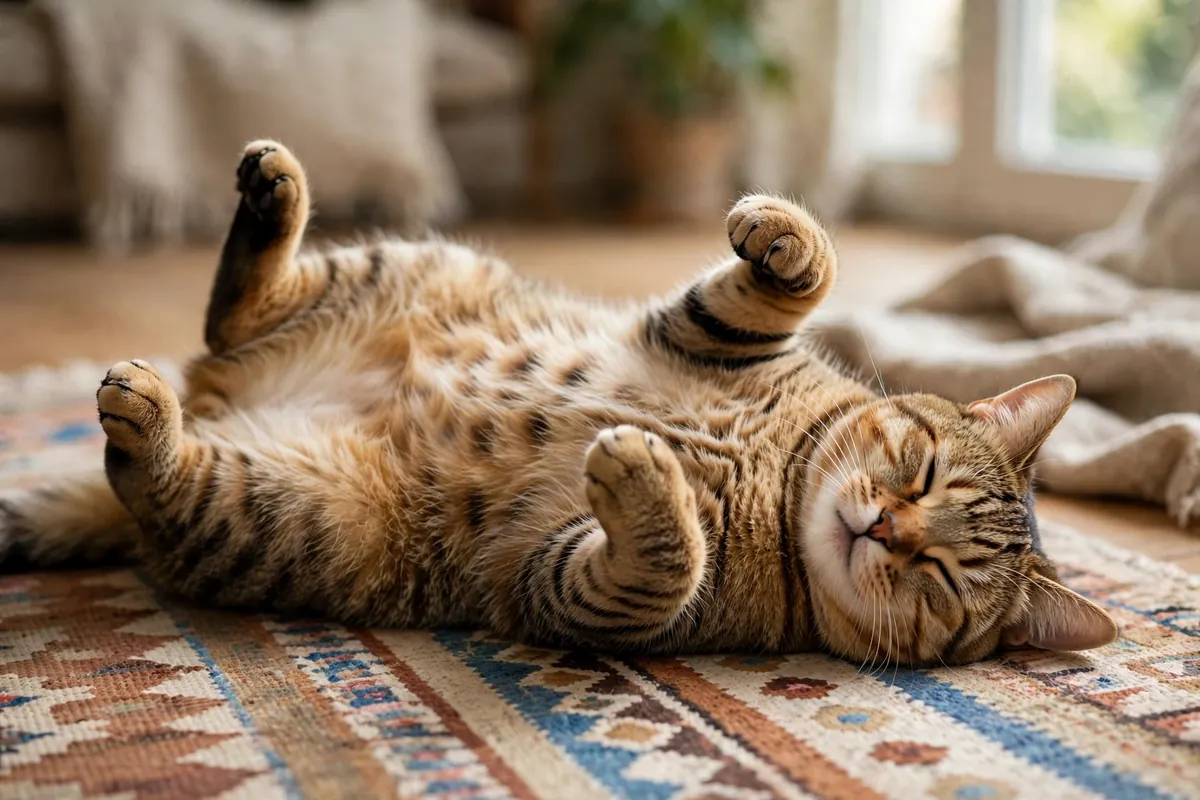
When your cat flops onto its back in front of you, belly up and paws in the air, it is easy to read it as an invitation: rub my belly. In most cases, it is not. A cat rolling on its back is usually saying hello, showing trust, or asking for play, and the belly display is part of the message, not a request to touch it. The belly is the most vulnerable part of a cat's body, and exposing it is a sign of comfort, not consent.
That distinction matters, because reaching straight for the belly is how many owners get grabbed, kicked, and bitten by a cat that was being friendly a second earlier. Once you learn to read the roll, the body language around it, the mood behind it, and what your cat does next, you can enjoy the greeting for what it is and avoid the trap. This guide explains why cats roll on their backs, what the belly trap really is, and when a belly rub is actually welcome.
Why Do Cats Roll on Their Backs?
Cats roll on their backs for several reasons, and the meaning depends on the moment. The most common reason is a social greeting. When you come home or walk into the room, your cat may flop over and show its belly as a friendly hello, a bit like a dog rolling over, but with a very different meaning. Your cat is saying it feels safe around you, and it is happy to see you.
Rolling is also a way for cats to stretch, cool off, and mark their scent. A cat rolling on a rug, a patch of carpet, or a sunny spot on the floor is often just enjoying the texture and the temperature, rubbing its back and spreading its scent at the same time. Cats also roll during play, especially kittens and young adults, as a way to invite a game. A cat that rolls and then bats at a toy or your hand is asking to play, not asking for a belly rub. Watch the context and the rest of the body, and the meaning usually becomes clear.
The Belly Trap: Why Your Cat Shows Its Belly but Doesn't Want It Touched
The belly trap is one of the most confusing things about cat body language, and it catches almost every new cat owner. A dog that rolls over is usually asking for a belly rub. A cat that rolls over is showing you its belly because it trusts you enough to expose its most vulnerable area, and that trust is exactly why touching it can feel like a betrayal to the cat. The belly holds the vital organs, and in the wild a cat would never expose it to anything it did not trust completely.
When a hand lands on that exposed belly, the cat's reflexes take over. The hind legs kick in a rabbit-kicking motion, the front paws grab, and the teeth may follow. This is not your cat turning on you or being mean. It is a defensive reflex, the same one a cat uses to hold prey and protect its belly in a fight. Many owners learn this the hard way, and the lesson is simple: a displayed belly is a sign of trust, not an open invitation.
Is It Safe to Rub a Cat's Belly?
It depends entirely on the cat. Some cats genuinely enjoy a brief belly rub and will purr through it, especially cats that have been handled gently around the belly since kittenhood. Others will tolerate a second or two before the reflex kicks in, and many will never accept it at all. None of these reactions mean anything is wrong with your cat. Belly sensitivity varies from cat to cat, just like people vary in how much they like being tickled.
If you want to test whether your cat likes it, go slowly. Offer one or two light strokes with a flat hand, then stop and see what your cat does. A cat that stays loose, keeps purring, and does not tense up is probably fine with it. A cat that stiffens, flicks its tail, flattens its ears, or wraps its paws around your hand is telling you to stop. Always keep the session short, and never hold your cat down to continue. The safest approach is to enjoy the display and rub somewhere your cat definitely likes instead, such as the chin or the cheeks.
How to Tell If Your Cat Actually Wants Belly Rubs
The difference between a cat that wants a belly rub and a cat that is setting a trap is written all over its body. A relaxed cat has soft eyes, often half closed, ears in a neutral forward position, and a loose, wiggly body. It may slow-blink at you, knead the air with its paws, and stay flopped on its side rather than flat on its back. These are signs of a cat that is calm and happy, and a brief, gentle touch may be welcome.
A cat that is about to grab you looks different. The body goes tense, the pupils widen, the ears flatten or swivel back, and the tail starts lashing or thumping. The cat may stare directly at your hand. These are warning signs, and they mean the belly display has shifted from a greeting into a play or defensive posture. Respect the warning and pull your hand back. Cats also change their minds quickly, so even a cat that enjoyed belly rubs yesterday may not want one today. Let your cat decide, every single time.
What to Do When Your Cat Rolls on Its Back
When your cat rolls over in front of you, the best response is a calm greeting. Talk to your cat in a soft voice, offer a chin scratch or a cheek rub, and let it enjoy the attention on its own terms. If your cat is in a playful mood, redirect that energy to a toy, a wand, or a crinkle ball, so the grabbing and kicking goes to the toy instead of your hand. This keeps the interaction fun and protects your skin.
It also helps to reward the behavior you want. If your cat rolls over and stays relaxed while you give it a chin rub, that is a lovely moment of trust, and your cat will repeat it. If your cat rolls over and you reach for the belly and get swatted, your cat learns that rolling leads to an unpleasant surprise, and it may stop greeting you that way. The golden rule is simple: admire the belly, pet the chin, and let your cat keep its trust in you.
Frequently Asked Questions
Why does my cat roll on its back when it sees me?
It is usually a friendly greeting. Your cat is saying hello and showing that it feels safe and comfortable around you. The belly display is a sign of trust, not necessarily a request for a belly rub, so greet your cat with a chin scratch and see how it responds.
Does rolling on its back mean my cat trusts me?
Yes, in most cases it does. The belly is the most vulnerable part of a cat's body, and a cat only exposes it when it feels safe. A cat that rolls over in your presence is comfortable with you. That trust is real, even if the cat does not want its belly touched.
Why does my cat bite me when I rub its belly?
Touching the belly triggers a defensive reflex in most cats. The hind legs kick, the front paws grab, and the teeth may follow, because the belly protects vital organs. It is not aggression or anger. Your cat is reacting on instinct, which is why most cats prefer chin and cheek rubs instead.
Do all cats hate belly rubs?
No, some cats enjoy a brief belly rub, especially cats handled gently around the belly from kittenhood. Others tolerate a second or two, and many never accept it. Every cat is different. Test it with one or two light strokes, watch for tense body language, and stop the moment your cat signals it has had enough.
Why does my cat roll on its back outside in the sun?
Cats often roll on their backs in a sunny spot to enjoy the warmth and stretch out. The sun warms their belly, and the roll lets them rub their back on the ground and spread their scent. It is a sign of a relaxed, content cat enjoying a good spot, much like rolling on a favorite rug indoors.