Why Does My Cat Run Sideways?
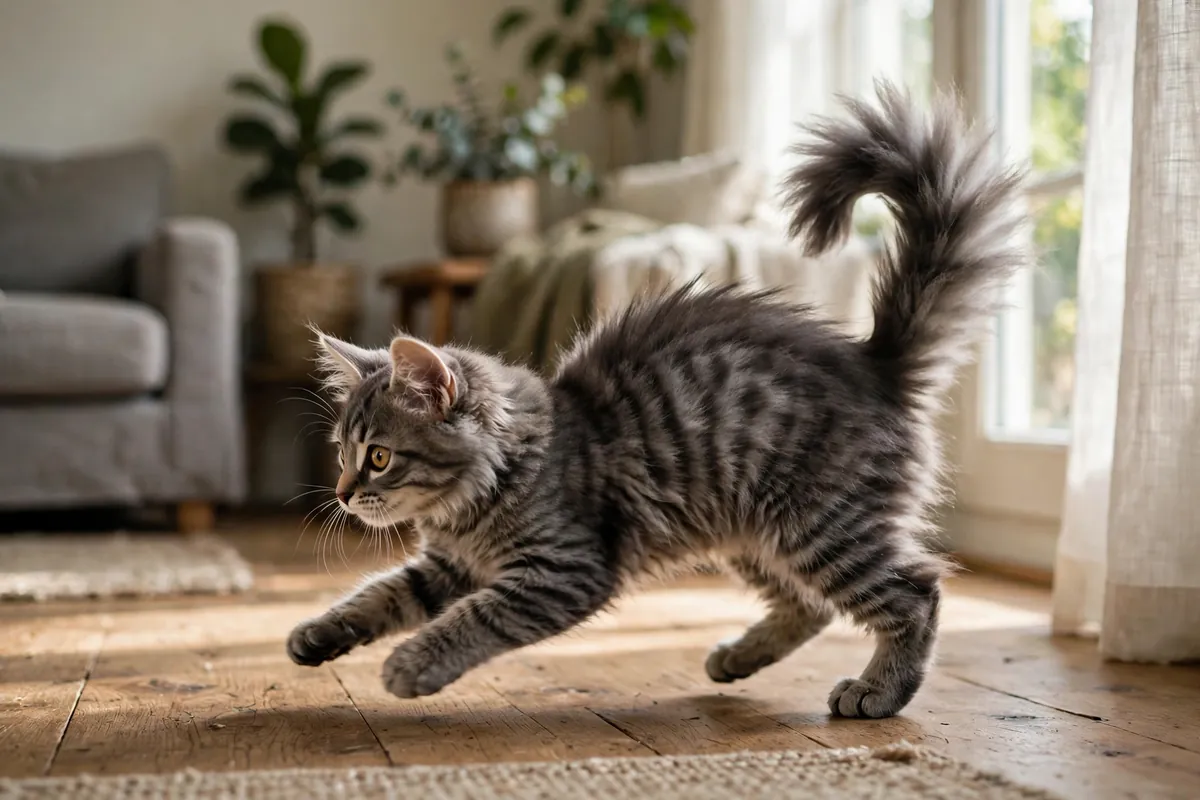
If you have ever watched your cat suddenly arch its back, puff up its tail, and bounce sideways across the room like a tiny crab, you have seen one of the funniest sights in cat ownership. It looks ridiculous, and it is supposed to. That sideways run is a display, a piece of cat body language that says either I am playing and this is the best game ever, or something startled me and I need to look bigger than I am.
The sideways run is often called the Halloween cat pose, because the arched back and puffed tail look exactly like the silhouette on a Halloween decoration. It is completely normal in most cases, and it is most common in kittens and young cats, who do it during play more than any other age group. This guide explains what the pose means, how to tell play from fear, and when the behavior is worth a closer look.
Why Does My Cat Run Sideways?
A cat runs sideways because it is doing two things at once: making itself look bigger and moving in a way that keeps its eyes on whatever caught its attention. The arched back, the puffed-up tail, and the stiff-legged sideways hop all serve the same purpose, which is to look larger and more dramatic. In the wild, looking bigger can scare off a rival or a threat without a fight, and in your living room the same display turns into a game.
Most of the time, the sideways run is play. A cat that has just spotted a toy, a moving shadow, or its own reflection will puff up, hop sideways, and then dash off, often in a loop around the furniture. The whole performance is a burst of excitement, and it usually ends as suddenly as it began, with the cat trotting off calmly or flopping down for a nap. If the sideways run is brief, bouncy, and followed by normal behavior, it is a cat having fun.
The Halloween Cat Pose, Explained
The Halloween cat pose has four parts, and they usually appear together. First, the back arches high, with the fur along the spine standing on end. Second, the tail puffs up to twice its normal width. Third, the legs go stiff and straight, so the cat looks taller than usual. Fourth, the cat turns sideways and hops or runs in that sideways direction, keeping its face toward whatever it is reacting to.
Each part has a job. The arched back and puffed fur make the cat look bigger. The stiff legs add height. The sideways position shows off the full size of the body while keeping the eyes on the other animal or object. It is a visual warning that says I am bigger than you think, and it is used by cats of all ages, though kittens use it most. The pose looks dramatic, but it is usually a bluff, not the start of a fight.
Play or Fear? Reading the Rest of the Body
The sideways run can mean play or fear, and the difference is in the rest of the body. A playful cat has wide, bright eyes, ears pointing forward, and a relaxed, bouncy movement. It will hop, dash, and then come back for more, often with a toy in its mouth or a playmate nearby. The whole performance has an energetic, happy feel, and the cat will usually relax within a minute or two.
A frightened cat looks different. Its ears are flattened back, its pupils are wide, its body is low and tense, and it may hiss or growl. A frightened cat that puffs up and runs sideways is trying to make a threat back off, and it will usually run to a hiding spot afterward rather than coming back to play. If your cat does the sideways run after a loud noise, a new visitor, or a strange animal outside, fear is the likely cause, and the best response is to give the cat space and let it calm down on its own.
Why Kittens Run Sideways Most
Kittens are the undisputed champions of the sideways run, and there are good reasons for that. Young cats have more energy, less self-control, and a stronger drive to practice the skills they will need as adults. The sideways hop is part of that practice: it teaches a kitten how to make itself look big, how to judge distance, and how to move quickly while watching a target. Every sideways dash is a rehearsal for a real confrontation that, thankfully, will probably never come.
Kittens also get startled more easily than adult cats, because the world is still new to them. A falling leaf, a moving curtain, or a sudden noise can trigger the full Halloween pose, followed by a wild dash around the room. As cats grow up, they usually do it less, because they have learned what is genuinely scary and what is just a curtain. An adult cat that still does the sideways run during play is usually a young-at-heart cat, and that is nothing to worry about. In fact, it is a sign that your adult cat still feels playful and safe enough to be silly.
When Sideways Running Is a Warning Sign
The sideways run is almost always harmless, but there are a few patterns worth watching. If your cat runs sideways and then limps, cries out, or avoids putting weight on a leg, it may have hurt itself during the dash, and a vet check is a good idea. If the behavior appears suddenly in an older cat that never did it before, and comes with hiding, loss of appetite, or a change in litter box habits, the sideways run may be a fear response to something that is stressing the cat.
Also pay attention to what triggers it. A cat that puffs up and runs sideways every time it sees another cat through the window may be stressed by the outdoor cat, and blocking the view or using a calming routine can help. A cat that does it constantly, without any obvious trigger, and seems anxious the rest of the time, may benefit from a vet visit to rule out pain or a health problem. In most homes, though, the sideways run is a brief, funny burst of energy, and the only thing it warns you about is that your cat is feeling playful.
How to Respond When Your Cat Runs Sideways
When your cat runs sideways in play, the best response is to enjoy it and, if you like, join in. A gentle game with a wand toy or a tossed toy mouse can turn the sideways dash into a proper play session, which is great exercise and great bonding. Keep the game gentle and let your cat set the pace. Never chase a cat that is doing the sideways run, because chasing turns a game into a fright, and a frightened cat can scratch or bite.
If the sideways run is a fear response, do the opposite: stay calm, speak softly, and give your cat space. Do not pick the cat up or corner it, because a frightened cat that feels trapped may lash out. Remove whatever startled the cat if you can, and let the cat retreat to a safe spot. Once it has calmed down, a quiet treat or a gentle word is enough. The sideways run is your cat communicating with you, so the right response is to listen to what it is saying and act accordingly.
Frequently Asked Questions
Why does my cat run sideways like a crab?
The sideways run is a display that makes the cat look bigger, with an arched back, puffed tail, and stiff legs. It is usually play, especially in kittens, but it can also be a fear response. Check the ears and eyes: forward ears and bright eyes mean play, flattened ears and wide pupils mean fear.
Is the Halloween cat pose normal?
Yes, the Halloween cat pose is completely normal. Cats arch their backs, puff their tails, and hop sideways to look bigger, either during play or when startled. It is most common in kittens and young cats, and it usually passes within a minute or two.
Why do kittens run sideways more than adult cats?
Kittens have more energy, less self-control, and a strong drive to practice adult skills such as making themselves look big. They are also startled more easily because the world is still new to them. Most cats do it less as they grow up and learn what is genuinely scary.
Should I worry if my cat suddenly runs sideways?
Usually not. A brief sideways run followed by normal behavior is just play or a startle. Worry if it comes with limping, crying out, hiding, or appetite changes, or if an older cat suddenly starts doing it all the time. In those cases, a vet visit is a good idea.
How should I react when my cat does the sideways run?
If it is play, you can join in gently with a wand toy and let your cat set the pace. If it is fear, stay calm, give your cat space, and remove whatever startled it. Never chase a cat that is puffed up and sideways, as that can turn a game into a fright.