Why Does My Cat Wag Its Tail? 7 Tail Signals Explained
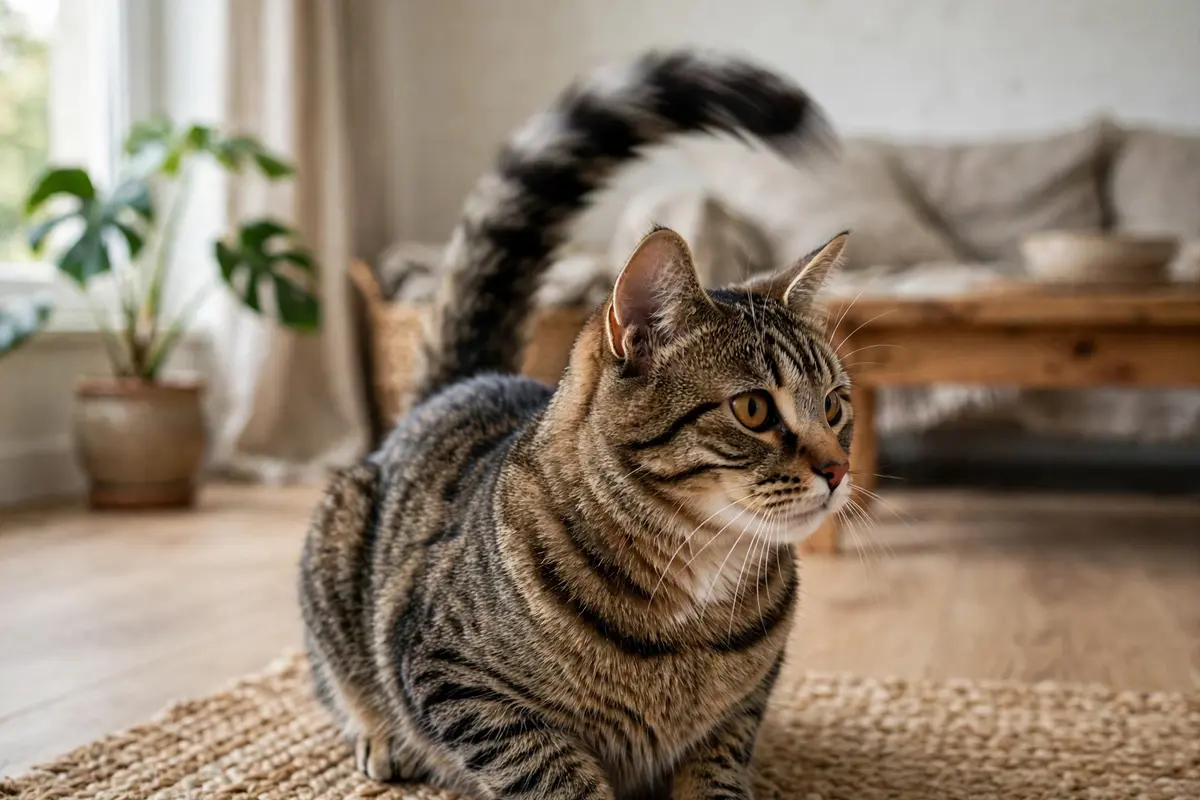
If you have ever watched your cat wag its tail and wondered whether it was happy, you are not alone — and the answer is probably not what you expect. Unlike dogs, cats do not usually wag their tails out of joy. In most cases, a wagging or swishing cat tail signals arousal, focus, irritation, or overstimulation. Learning to read that signal can save you from a surprise swat and help you understand your cat's mood in real time.
Cat tail language is surprisingly precise: the speed, height, and shape of the tail all change the meaning. This guide explains seven common cat tail movements, starting with the one owners ask about most: tail wagging while being petted.
1. Cat Tail Swishing While Petting Means Overstimulated — Stop Petting
This is the most-asked tail question, and the most important one to get right. Your cat is purring on your lap, you are stroking its back, and then the tail starts to swish, side to side, faster and faster. That swish is not a sign of extra happiness. It is your cat telling you that the petting has become too much.
Cats can become overstimulated by repeated stroking, especially along the belly, the base of the tail, or the same spot over and over. The tail is often the first warning sign, before the ears flatten, the skin twitches, or the cat turns to nip. The moment you see that swish, the kindest move is simple: stop petting, keep your hand still, and let your cat decide what happens next. Most cats will settle, stretch, and either stay or walk away calmly. If you keep stroking through the warning, you are much more likely to get a bite or a swat — and that is communication, not spite.
Learn your own cat's limit: short, calm sessions that end before the swishing starts build far more trust than long sessions that end in a scratch.
2. Slow, Sweeping Swish: Deep Focus or Mild Irritation
A slow, wide sweep of the tail usually means your cat is thinking hard about something. You will see it when a cat watches a bird through the window, tracks a toy across the floor, or weighs up whether to jump onto a high shelf. The body is usually still, the eyes are locked on, and the tail moves like a metronome.
The same slow swish can also mean mild irritation, such as waiting impatiently for dinner. If the eyes are fixed on a toy or bird, it is focus; if the ears are slightly back and the body tense, it is annoyance, and space is the right call.
3. Fast Thrashing or Lashing: Angry, Agitated, or Ready to Act
When the tail starts whipping back and forth quickly, your cat is agitated. This is the feline version of a raised voice. You might see it during a standoff with another cat, after a loud noise startles your pet, or when a cat has been held for too long and wants down now.
Do not try to pick up, soothe, or play with a cat whose tail is thrashing. Back off, speak softly if you speak at all, and let the cat cool down in its own time. A thrashing tail combined with flattened ears, dilated pupils, and a low crouch means the cat feels cornered, so make sure it has a clear escape route rather than blocking its path.
4. Tail Straight Up With a Gentle Wag: A Happy Greeting
Here is the exception that proves the rule. A tail held straight up, sometimes with a soft curve or a gentle quiver at the tip, is one of the friendliest signals a cat can send. Cats greet trusted people and other cats this way, often trotting toward you with ears forward and a relaxed body.
If your cat meets you at the door with its tail up and gives a little chirp or rubs against your legs, that is genuine affection. This is the closest a cat gets to a dog's happy wag — but notice the difference: the tail is up, the movement is small and soft, and the whole body is relaxed. A tail held high is confidence and warmth, not the tense side-to-side sweep of an irritated cat.
5. Puffed-Up, Bristled Tail: Fear and Self-Defense
A tail that suddenly doubles in size, with the fur standing on end, means your cat feels scared or threatened and is trying to look bigger. You will often see it alongside an arched back, sideways posture, and wide eyes. The cat is not showing off; it is hoping the scary thing — another cat, a dog, a vacuum cleaner — will back away.
Remove the pressure: step back, turn sideways, and avoid direct eye contact. If another animal is involved, separate them calmly without grabbing your frightened cat. Once the threat is gone, the tail usually returns to normal within minutes.
6. Low or Tucked Tail With a Twitch: Worry, Submission, or Pain
A tail held low, close to the body, or tucked between the legs signals worry or submission. A shy cat meeting a stranger may carry its tail low, and a cat that has just been scolded may do the same. A small, nervous twitch at the tip adds to the picture: the cat is unsure and would rather retreat than confront.
If a normally confident cat suddenly carries its tail low all the time, or cries when its tail is touched, it may point to injury or pain — note the change and call your vet if it persists. Never pull or lift the tail to test it.
7. Tail Chasing and Biting: Play, Boredom, or Something to Check
Kittens chase their tails in play, and many adult cats will do a brief, silly spin when they are feeling frisky. That occasional chase is normal, especially after a nap or during a burst of evening energy. It becomes worth investigating when it is frequent, frantic, or ends with the cat biting its own tail hard enough to cause bald patches or sores.
Frequent tail chasing can come from boredom, fleas, skin irritation, or less commonly pain. Ensure daily play, check for fleas, and mention persistent chasing to your vet.
How to Respond to Cat Tail Movements
The golden rule is simple: read the tail, then respect it. A relaxed, upright tail invites interaction. A swishing or thrashing tail asks for space. When in doubt, pause what you are doing and watch for a few seconds — cats are remarkably clear once you know what to look for, and they reward owners who listen.
Watch the whole cat, not just the tail: ears forward and a soft body mean comfort, while flat ears and a tense body mean distance is needed.
When to See a Vet About Tail Behavior
Most tail wagging is normal communication, but seek veterinary advice if you notice a sudden change that does not settle: a tail that hangs limp, a cat that yelps when its tail is touched, repeated tail biting, or tail wagging paired with hiding, loss of appetite, or limping. These can signal injury, nerve problems, or skin disease that need professional attention rather than a behavior fix.
For more on reading your cat's body language, explore our Cat Behavior guides and return to the Purrfect Paws homepage for the latest articles.
Frequently Asked Questions
Why does my cat wag its tail while I pet it?
It usually means your cat is becoming overstimulated. A tail that starts swishing during petting is an early warning: stop petting, let your cat settle, and give it space before it escalates to a nip or swat.
Does a wagging tail mean my cat is happy like a dog?
Not usually. Dogs wag their tails when excited or happy, but cats most often wag or swish their tails when they are focused, irritated, or overstimulated. A happy cat more often holds its tail upright with a soft curve at the tip.
What does a puffed-up tail mean?
A puffed-up, bristled tail means your cat feels scared or threatened and is trying to look bigger. Back away calmly, remove whatever is frightening it if you can, and let it retreat to a safe spot.
Why does my cat wag its tail while watching birds?
That slow, focused swish is hunting concentration. Your cat is locked onto prey, judging distance and timing. It is normal behavior and not a sign of anger.
When should I worry about tail wagging?
See a vet if tail wagging comes with tail chasing, biting at the tail, limping, a drooping tail, or a sudden change in behavior, as pain, injury, or a skin problem could be involved.