Why Does My Cat Scratch the Furniture? 5 Fixes
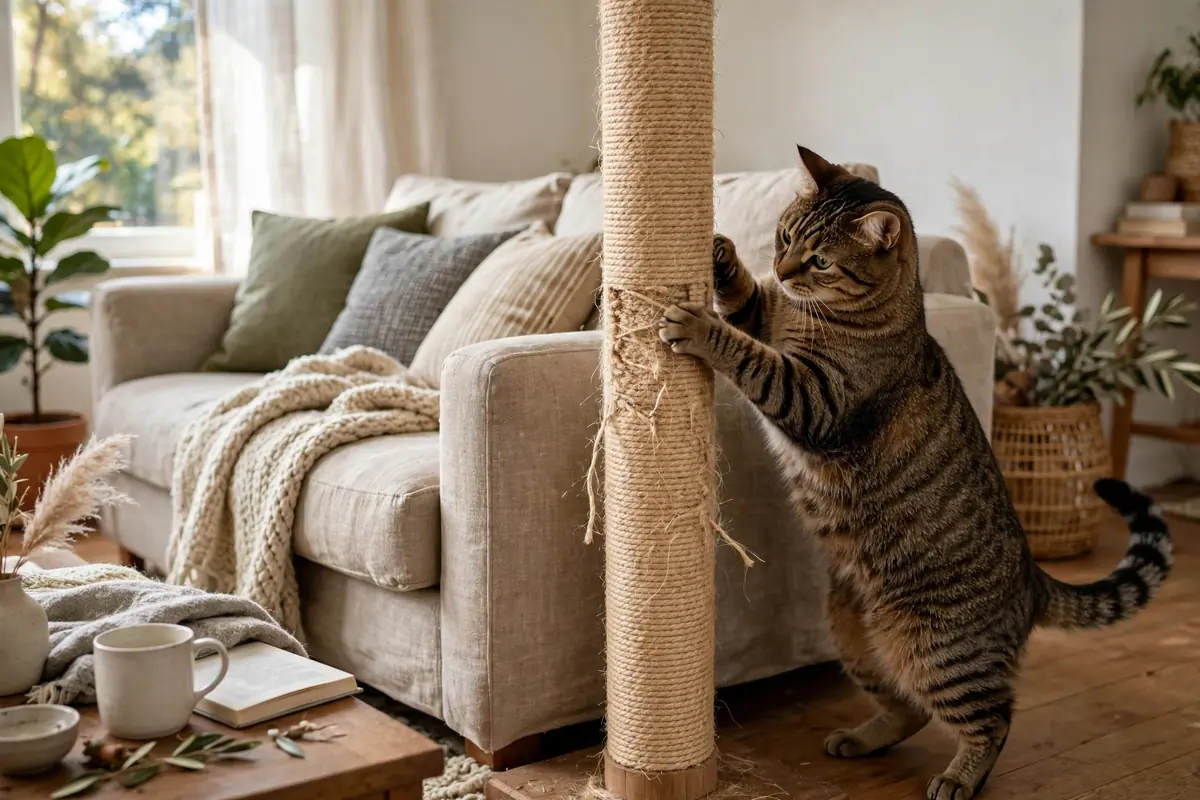
If your sofa arms look like they lost a fight with a tiny tiger, take heart: your cat is not being naughty, and you do not have to choose between your furniture and your cat. Cats scratch because they need to — it keeps their claws healthy, stretches their muscles, and marks their territory. The fix is not to stop the scratching but to redirect it, and five humane steps will get you most of the way there: offer the right scratcher, put it in the right spot, reward your cat for using it, keep claws trimmed, and protect the furniture while the new habit forms.
Most owners see a big improvement within a couple of weeks once the setup is right. The trick is understanding what your cat is actually getting out of scratching, because a scratcher that does not meet those needs will sit untouched while the sofa keeps taking the damage. Browse more cat behavior guides on Purrfect Paws for help decoding the rest of your cat's habits too.
Why Scratching Is Normal Cat Behavior
First, claw care. A cat's claws grow in layers, like an onion, and scratching drags off the worn outer sheath to reveal a sharp new claw underneath. That is why you sometimes find crescent-shaped claw sheaths stuck in the scratcher or on the rug — they are a sign of healthy claw maintenance, not damage. Without a good scratching surface, claws can grow long, snag, and even curl painfully, so scratching is genuinely part of your cat's self-care.
Second, stretching. Watch a cat scratch and you will see a full-body stretch: front legs extended, back arched, shoulders and spine worked through their range of motion. Cats often scratch first thing after a nap, which is why scratchers near favorite sleeping spots get so much use. A post that is too short for a full stretch simply will not satisfy this urge, and your cat will go back to the taller, sturdier sofa arm instead.
Third, scent marking. Cats have scent glands between their toes, and every scratch leaves both a visible mark and a scent signal that says "this is mine." That is why cats return to the same spots again and again, and why they often scratch near doorways, windows, and the places where their people sit. It is communication, not spite — your cat is marking the shared home as safe territory, and a well-placed scratcher gives them a better billboard than your armchair.
Fix 1: Offer the Right Scratcher Types
Not all scratchers are equal, and your cat's preference matters more than any product review. Most cats love a tall, heavy vertical post wrapped in sisal rope, at least as tall as your cat stretched out — roughly 30 inches or more for an average adult cat. It must be rock-solid: if it wobbles when your cat leans into it, your cat will abandon it instantly and go back to the sofa, which never wobbles.
Some cats, though, are horizontal scratchers. They prefer flat cardboard pads or low, angled boards they can rake while crouched. If your cat scratches carpets or rugs, a flat scratcher is probably their style. The safest approach is to offer one vertical and one horizontal option and watch which one gets used. Also try different materials — sisal rope, sisal fabric, carpet, and corrugated cardboard all feel different under claws, and cats can be surprisingly picky. In multi-cat homes, provide at least one scratcher per cat, plus one extra, so no cat has to compete or wait.
Fix 2: Put Scratchers Where Your Cat Already Scratches
Placement is where most scratcher plans fail. People tuck the post in a spare room or a quiet corner, then wonder why the cat ignores it. Put the scratcher right next to the furniture your cat targets — literally inches away from the sofa arm or chair leg. You can slide it a few inches further away every few days once your cat is using it regularly, but start where the habit already lives.
Also place scratchers in the spots cats naturally want to mark: near sleeping areas for the post-nap stretch, by doorways, and in the room where the family spends the most time.
Fix 3: Train With Rewards, Not Scolding
Cats learn fastest when the right choice pays off. When your cat uses the scratcher, reward them right away with a treat, a favorite toy, or enthusiastic praise and a chin scratch. You can spark initial interest by dangling a wand toy up the post, sprinkling a little catnip or silvervine on it, or placing treats on its base so your cat discovers it on their own terms.
If you catch your cat scratching the sofa, stay calm. Gently redirect them to the scratcher and reward them the moment their paws touch it. What does not work is scolding after the fact — your cat will not connect your anger with a scratch made an hour ago, and will simply learn to scratch when you are not watching. Patience matters here: most cats shift their habit within one to three weeks of consistent, rewarded redirection.
Fix 4: Trim Nails and Consider Soft Nail Caps
Regular nail trims take the sharp edge off scratching damage without changing the behavior itself. Trim just the sharp tip of each claw every two to three weeks, taking care to avoid the pink quick inside the nail, where blood vessels and nerves live. If you are nervous the first time, ask your vet or groomer to demonstrate — a quick lesson makes the job much easier, and many cats accept trims calmly if you pair each paw with treats and keep sessions short.
Soft vinyl nail caps are another humane option. These small caps glue over each claw, blunting damage to furniture while still letting your cat scratch, stretch, and retract its claws normally. They typically need replacing every four to six weeks as nails grow and shed. Caps are a good bridge while scratcher training takes hold, but they are not a substitute for a proper scratcher — your cat still needs somewhere to scratch.
Fix 5: Protect Furniture and Calm Stress-Related Scratching
While the new habit forms, protect the furniture itself. Slipcovers, throws, or furniture guards over the scratched spots remove the satisfying texture and give the area a break. Double-sided sticky tape made for cats, applied to the sofa arms, is also effective — most cats dislike the sticky feeling and will choose the scratcher instead.
Also look at stress. Scratching often increases after a move, a new pet, a new baby, or building work, because marking territory helps an anxious cat feel secure. In those cases, the scratching is a coping behavior, not defiance. Keep routines steady, give your cat quiet resting spots and vertical territory like shelves or a cat tree, and consider a feline pheromone diffuser in the main living area. If scratching suddenly spikes alongside hiding, appetite changes, or litter box problems, book a vet visit — pain or illness can drive behavior changes too.
What NOT to Do About Furniture Scratching
Some "solutions" cause real harm and should never be used. Declawing is not a manicure — it is the surgical amputation of the last bone of each toe, and it can cause chronic pain, lameness, and behavior problems such as biting or avoiding the litter box. It is banned or restricted in many places, and vets widely oppose it for behavior reasons. Never have a cat declawed to save furniture.
Likewise, do not punish scratching by shouting, hitting, or spraying your cat with water. Punishment teaches fear, damages trust, and usually pushes the scratching to times when you are out of the room. It does not teach your cat where to scratch instead. The humane formula is simple and it works: give a better option, make it easy to find, reward using it, and protect the furniture in the meantime.
Frequently Asked Questions
Can I stop my cat from scratching completely?
No, and you should not try. Scratching is a normal, healthy behavior cats need for claw care, stretching, and scent marking. The goal is to redirect scratching to a scratcher your cat loves, not to eliminate the behavior.
What type of scratcher do most cats prefer?
Most cats prefer a tall, sturdy vertical post wrapped in sisal rope, tall enough for a full stretch. Some cats prefer horizontal cardboard scratchers. Offer one of each and watch which one your cat uses most, then add more of that style.
Are soft nail caps safe for cats?
Soft vinyl nail caps are generally safe when applied correctly and replaced as nails grow, usually every four to six weeks. They blunt the damage from scratching without stopping the behavior. Ask your vet to show you the first application.
Why does my cat scratch right after I buy a new scratcher and then ignore it?
Placement and stability are usually the problem. A wobbly post, a post hidden in a back room, or a brand-new smell can put a cat off. Put the scratcher where your cat already scratches, make sure it does not wobble, and rub it with catnip or a treat trail to spark interest.
My cat suddenly started scratching much more — should I worry?
A sudden increase in scratching can signal stress, a new pet or move, or discomfort such as sore paws or overgrown claws. Check for household changes and paw problems, and book a vet visit if the change is sudden, intense, or comes with other behavior changes.