Why Does My Cat Shake Its Head? 7 Causes
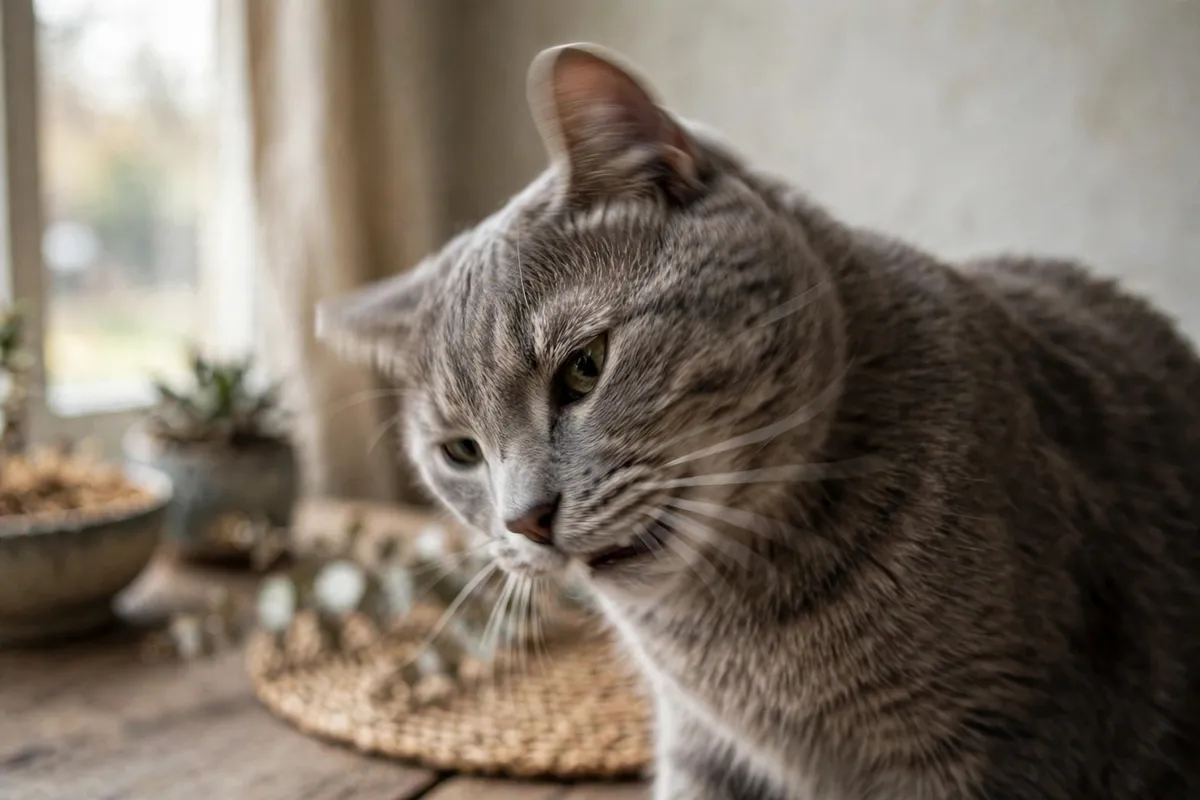
An occasional head shake is perfectly normal — cats shake their heads after grooming, after a sneeze, or when a drop of water lands on an ear. But when head shaking becomes frequent, forceful, or paired with scratching, tilting, or a bad smell from the ears, it is usually a sign that something inside the ear is irritating your cat. Ears are sensitive, and cats cannot tell us they itch or hurt, so repeated head shaking is one of the clearest signals they have.
The causes range from simple and easily treated, like ear mites, to conditions that need ongoing management, like allergies. This guide walks through the seven most common reasons cats shake their heads, the extra signs that point to each one, what you can safely check at home, and when to book a vet visit instead of waiting.
1. Ear Mites: The Classic Cause
Ear mites are tiny parasites that live in the ear canal and feed on skin debris, and they are the single most common cause of head shaking in kittens and outdoor cats. The classic signs are intense itching — your cat may scratch at its ears with a back paw, shake its head hard, and rub its ears along furniture — plus dark, crumbly, coffee-ground-like debris inside the ear flap. The debris is a mix of mite waste, dried blood, and ear wax, and it often has a faintly unpleasant smell.
Ear mites spread easily between cats, so if one cat in a multi-cat home has them, the others should be checked too. They are diagnosed with a quick ear swab under the microscope at the vet, and treated with prescription ear drops or a topical parasite treatment. Do not try to treat mites with home remedies or leftover drops from another pet: the wrong product can damage the eardrum, especially if the eardrum is already irritated, and incomplete treatment lets the mites come straight back.
2. Ear Infections
Bacterial and yeast infections of the outer ear canal cause itching, pain, redness, and often a strong smell. Yeast infections tend to produce a dark brown waxy discharge and a musty odor, while bacterial infections may produce yellow or green discharge and more obvious pain — the cat may cry when the ear is touched, hold the ear flat, or tilt its head to one side. Cats with floppy ears or narrow ear canals are more prone, and any cat with allergies is more likely to develop recurring infections.
Ear infections need veterinary diagnosis because treatment depends on the organism involved and on whether the eardrum is intact. Your vet may clean the ears, take a swab, and prescribe drops, and in severe cases oral medication as well. Never pour hydrogen peroxide, alcohol, vinegar, or essential oils into a cat's ear — these can be painful and damaging. If your cat's head shaking came on suddenly with obvious pain, treat it as a same-week vet visit, not a wait-and-see.
3. Allergies and Itchy Skin
Cats with food or environmental allergies often show it in their ears first. The ears become red and itchy, the cat shakes and scratches, and the problem may come and go with the seasons or flare after a food change. Pollen, dust mites, and certain proteins are common triggers. Unlike a single infection, allergy-related ear trouble tends to recur, and the cat may also lick its belly, groom excessively, or develop scabs around the head and neck.
If ear problems keep returning after treatment, ask your vet about an allergy workup rather than repeating the same drops indefinitely. Food trials, environmental controls like washing bedding and vacuuming, and in some cases long-term allergy management can break the cycle. Managing the underlying allergy is what stops the head shaking for good, while drops alone only quiet each flare.
4. Something Stuck in the Ear
Grass seeds, dirt, and small debris can work their way into a cat's ear canal, especially in outdoor cats in summer. The onset is usually sudden: a cat that was fine an hour ago starts shaking its head violently, pawing at one ear, and tilting its head to that side. This is one of the few head-shaking causes where the cat may be in real distress quickly, because a foreign body moving deeper can damage the canal or the eardrum.
Do not try to fish anything out with tweezers or cotton buds — you are far more likely to push it deeper or injure the ear. Keep the cat calm, stop it from scratching if you can, and call the vet the same day. Removal usually needs sedation and proper instruments, and it is quick and routine once the cat is safely handled. After removal, a short course of drops usually settles any irritation left behind.
5. Ear Polyps, Growths, and Other Causes
Less commonly, head shaking comes from a polyp or growth in the ear canal, a deep middle-ear infection, or even a neurological problem. Polyps are benign growths that often appear in younger cats and cause persistent one-sided shaking, discharge, and sometimes a change in voice or difficulty swallowing if they extend into the throat. Middle-ear infections can cause head tilt, loss of balance, and a drooping face on one side, and they need prompt veterinary care.
Other triggers include water in the ears after a bath, a reaction to a new ear cleaner, and occasionally flea allergy affecting the head and ears. The pattern to remember is simple: one-off shakes after grooming or a bath are normal, but repeated shaking, especially on one side, with scratching, discharge, smell, or a head tilt, always deserves a vet check. Ears do not usually settle on their own once they are genuinely inflamed.
What You Can Check at Home
You can gently look inside the ear flap — never probe the canal — for redness, swelling, dark debris, or a bad smell, and compare both ears, since problems are often worse on one side. Note when the shaking started, whether it is one ear or both, and any other signs: scratching, appetite, balance, or discharge. This short history helps your vet enormously. Keep the ears dry, do not start any leftover ear drops without advice, and use an Elizabethan collar if your cat is scratching hard enough to wound itself.
If your cat will tolerate it, a gentle wipe of the outer ear flap with a damp cloth can remove surface debris, but stop if the cat is in pain. Routine ear cleaning is not needed for most healthy cats — their ears clean themselves — and over-cleaning can cause irritation. Save deep cleaning for the vet, who can do it safely and check the eardrum at the same time.
⚠️ Vet disclaimer: This article is general information only and is not a substitute for veterinary advice. Never put liquids, oils, or medications into your cat's ears without veterinary guidance, especially if the eardrum may be damaged. Persistent head shaking, head tilt, or discharge should be examined promptly.
Is it normal for a cat to shake its head sometimes?
Yes. An occasional shake after grooming, sneezing, or a bath is normal. Frequent, forceful, or one-sided shaking, especially with scratching, is not — it usually means irritation or infection in the ear.
What do ear mites look like in a cat?
You usually cannot see the mites themselves. The clue is dark, crumbly, coffee-ground-like debris in the ear, intense itching, and head shaking. A vet confirms mites with a microscope swab.
Can I clean my cat's ears at home?
You can gently wipe the outer ear flap with a damp cloth, but do not probe the canal with cotton buds or pour in home remedies. Deep cleaning and medicated drops should be done on veterinary advice.
Why is my cat only shaking one ear?
One-sided shaking often points to a foreign body, a polyp, or an infection in that ear. It deserves a vet check, especially if it started suddenly or the cat is tilting its head.
Will head shaking go away on its own?
Sometimes a single shake after water or grooming means nothing. But repeated shaking from mites or infection will not resolve without treatment and usually gets worse, so do not wait it out.