Why Does My Cat Sit in Sinks and Bathtubs?
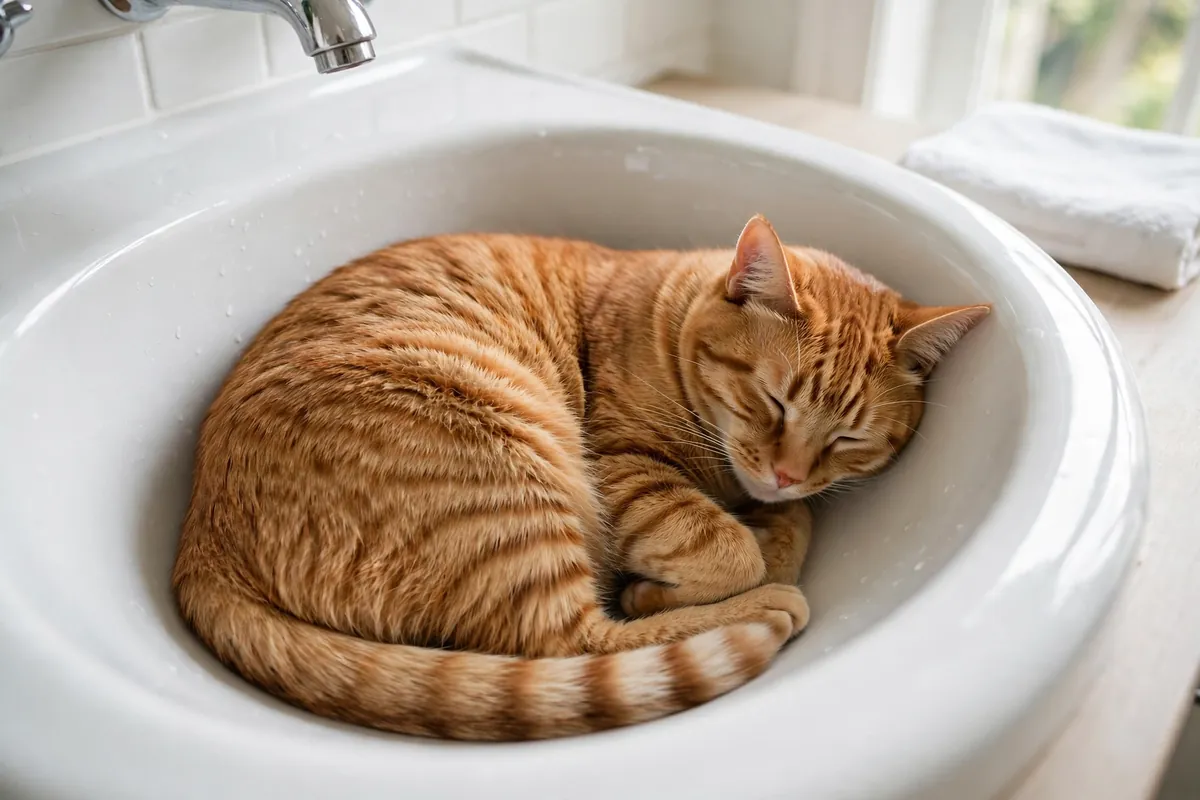
There is a special kind of cat owner who has learned to brush their teeth around a cat. If your cat treats the bathroom sink like a personal bed, you are in good company. Cats sitting in sinks and bathtubs is one of the most photographed cat behaviors in the world, and it is almost always harmless. The sink is cool, it is shaped like a nest, and it puts your cat exactly where the action is: right next to you.
There is usually more than one reason at work. The porcelain stays cool on a warm day, the curved shape hugs a curled-up cat perfectly, and the bathroom is often the one room where a cat gets your undivided attention. But sink-sitting can occasionally signal something else, like a cat trying to cool down because it is overheating. Here is how to read the behavior and what to do about it.
Why Do Cats Sit in Sinks and Bathtubs?
Cats sit in sinks and bathtubs because the sink gives them several things they love at once. It is a smooth, cool surface that stays comfortable in warm weather. It is a curved, enclosed space that makes a cat feel protected, much like a box. And it is usually in the bathroom, where the cat's favorite person spends a few quiet minutes every morning and evening. For a cat, that combination is hard to beat.
The bathtub adds one more attraction: it is a big, open, cool space that is perfect for stretching out on a hot day, and it is often the coolest surface in the house. Many cats also like the faint sound of dripping water and the smell of the drain, which carries interesting scents. If your cat sits in the sink every day, it is probably a habit it enjoys, not a problem you need to solve. The main thing to check is whether the behavior changes suddenly, which can mean something has changed for your cat.
Cool Porcelain: A Cat's Natural Air Conditioning
Cats do not sweat the way people do. They lose heat mainly through their paw pads and by panting, which means they look for cool surfaces when the weather warms up. Porcelain and ceramic are naturally cool to the touch, and a sink or bathtub holds that coolness even on a warm afternoon. On a hot day, a sink is one of the most comfortable places in the house for a cat.
This is why sink-sitting often increases in summer and fades in winter. Longhaired cats, overweight cats, and older cats feel the heat more, so they are often the most dedicated sink-sitters. If your cat only claims the sink on warm days and sleeps in its usual bed the rest of the year, the cool porcelain is almost certainly the reason. Making sure your cat has other cool resting spots, like a tile floor or a shaded window, gives it options on the hottest days.
The Enclosed Shape: Why Sinks Feel Like a Safe Nest
A sink is shaped like a bowl, and a curled-up cat is shaped like a ball, so the two fit together beautifully. Cats love spaces that hug them on all sides, because an enclosed spot feels safe and lets them relax without watching every direction at once. It is the same reason cats squeeze into boxes, laundry baskets, and drawers, even when a perfectly good cat bed is sitting empty nearby.
The sink also gives a cat a vantage point. From the counter, a cat can see the whole bathroom, watch you, and stay out of reach of dogs or small children. The raised position matters: cats feel safer up high, and a sink on a counter is a high, enclosed, cool spot all at once. If your cat seems to love the shape more than the coolness, a round cat bed or a covered cave bed in the same room often works as a substitute.
Attention-Seeking: The Sink Puts Your Cat Next to You
For many cats, the sink is really about you. The bathroom is one of the few rooms where a person stands still for a few minutes, and a cat that climbs into the sink is suddenly at face height, right in the middle of your routine. It is a guaranteed way to get petted, talked to, and noticed. Cats learn quickly that the sink gets results.
Some cats take it a step further and turn the sink into a game, batting at the tap, pawing at dripping water, or demanding that you turn the tap on. If your cat only sits in the sink when you are in the bathroom and ignores it the rest of the day, attention is the main reward. Giving your cat a few minutes of focused play or petting before your morning routine can reduce the sink-claiming, though many owners simply accept the company and brush their teeth around the cat.
When Sink-Sitting Signals Overheating
Most sink-sitting is normal, but there are times when it is a sign that your cat is too hot. If your cat is lying flat in the bathtub or sink on a hot day, panting with its mouth open, breathing fast, or acting lethargic, it may be overheating. Cats rarely pant, so open-mouth breathing in a cat is always worth taking seriously, especially in hot weather or in a warm, stuffy room.
Other warning signs include drooling, restlessness, a hot feeling to the ears and paws, or refusing to eat or play. If you see these signs, move your cat to a cool room, offer fresh water, and dampen its paws and belly with a cool cloth. Never use ice water or an ice bath, which can shock the system. If the panting continues, or your cat seems weak or confused, call your vet right away, because heatstroke in cats can become serious quickly.
Should You Let Your Cat Sit in the Sink?
In most cases, yes. A clean, dry sink is a harmless place for a cat to rest, and many owners find the habit charming. There are a few practical rules worth following. Keep cleaning products, razors, and medications out of the sink and off the counter, because a cat sitting in the sink can knock things over or lick residues. Rinse the sink before your cat uses it if you have just cleaned it with chemicals, and keep the drain plug out of reach, since some cats will bat it around or chew it.
Watch out for the tap as well. A cat that learns to turn on a tap can flood a bathroom, and hot water is a burn risk. If your cat is a tap-turner, use lever taps that are harder for paws to operate, or keep the bathroom door closed when you are out. The bathtub needs a similar check: make sure there is no standing water with bath products in it, and never leave a cat unsupervised in a tub with water.
Making the Sink Safer, or Offering a Better Spot
If you would rather keep the sink cat-free, the kindest approach is to offer something better, not just to block the sink. A cool ceramic tile, a round cat bed on a raised surface, or a covered cave bed near a window can give your cat the same enclosed, cool feeling. Place the alternative near the bathroom or in your cat's favorite room, and add a familiar-smelling blanket to make it inviting.
You can also make the sink less appealing by keeping it wet, or by placing a towel in it, which removes the smooth cool surface cats love. Close the bathroom door when you are not using it, especially if your cat is a tap-turner or chews on drain plugs. Whatever you choose, do not punish the cat for sink-sitting: it is a normal behavior, and the cat is simply looking for comfort, safety, and your company. A better spot, offered patiently, works far better than a scolding.
Frequently Asked Questions
Why does my cat sleep in the sink?
The sink is cool, curved like a nest, and raised up high, which ticks three boxes cats love: comfort, safety, and a good view. Many cats also sit in the sink to be near their owner during the morning and evening bathroom routine.
Is it safe for cats to sit in the bathroom sink?
Yes, a clean, dry sink is safe for most cats. Keep cleaning products, razors, and medications away from the counter, rinse the sink after using chemicals, and make sure your cat cannot turn on a hot tap or chew the drain plug.
Why does my cat sit in the bathtub?
The bathtub is a large, cool porcelain surface that is perfect for stretching out on a hot day. Cats also like the enclosed shape and the faint sounds and smells around the drain. It is usually a comfort habit, not a problem.
Does sink-sitting mean my cat is too hot?
Not usually, but it can be a cooling behavior on warm days. Watch for warning signs of overheating, such as panting, drooling, lethargy, or fast breathing. If you see those, move your cat to a cool room, offer water, and call your vet if the panting continues.
How do I stop my cat sitting in the sink?
Offer a better alternative, such as a round cat bed or a cool tile in a raised spot, and keep the bathroom door closed when you are not using it. Making the sink wet or placing a towel in it also removes the appeal. Avoid punishing the cat, as sink-sitting is a normal comfort behavior.