Why Does My Cat Sleep on My Feet? 6 Sweet Reasons
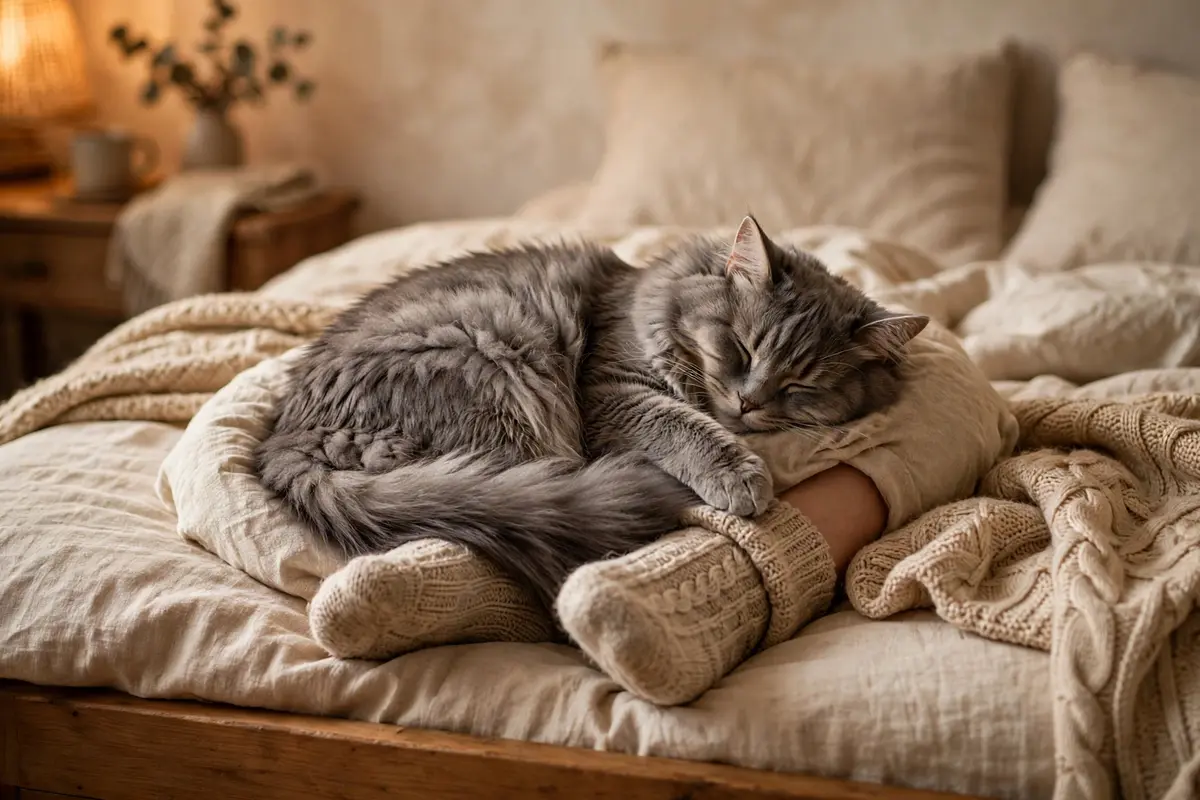
Every night it is the same ritual: you climb into bed, get comfortable, and within minutes a warm, purring weight settles itself firmly on your feet — and stays there until morning. If you have ever wondered why your cat picks your feet, of all places, the answer is more affectionate than you might think. In short, your feet offer the perfect combination of warmth, safety, and closeness: your cat gets to sleep next to the person they trust most, with a clear escape route and without being trapped under an arm or blanket. Sleeping is the most vulnerable thing a cat does, so where they choose to do it says a lot about how they feel about you. Here are the six reasons your cat has claimed your feet as their favorite bed.
1. Your Feet Are a Perfect Little Heater
Cats run warmer than humans — a healthy cat's body temperature sits around 101 to 102.5°F — and they are constantly on the lookout for warm spots. Your feet, tucked under a blanket, radiate steady warmth all night long, and the foot of the bed is often the warmest, most sheltered part of it. This is the same instinct that sends cats to sunny windowsills, laptops, and freshly folded laundry. In colder months you may notice the foot-sleeping habit gets even more dedicated, and in summer your cat may move to the edge of the bed or the floor. If warmth is the main draw, a heated cat bed placed at the foot of your bed will often tempt them to relocate — though many cats will still prefer the original, you-shaped version.
2. It Is a Sign of Deep Trust
In the wild, a sleeping cat is a vulnerable cat, and that instinct has not disappeared just because your cat now lives indoors. Cats sleep most deeply only where they feel completely safe, and choosing to sleep on you — even just on your feet — means your cat counts you as part of their safe territory. This is one of the highest compliments a cat can pay. A cat that does not trust you will sleep under the bed, behind furniture, or in a high, hidden perch. A cat that sleeps on your feet has decided that you are their safe place. It may not look as dramatic as a cat curled on your chest, but in cat language, it means just as much.
3. Your Feet Smell Like You — and That Is Comforting
Cats live in a world of scent. Your feet carry your scent more strongly than most parts of your body, thanks to the many sweat glands there, and to your cat that scent is deeply familiar and reassuring. Sleeping surrounded by it is like a child falling asleep clutching a parent's sweater. Cats also mark their favorite people by rubbing against them, and settling on your feet lets them mix their scent with yours, which strengthens the bond in their mind. This is also why a cat may sleep on your shoes, your slippers, or the side of the bed you sleep on even when you are not in it — they are seeking the comfort of your scent.
4. Feet Offer Closeness Without Feeling Trapped
Not every cat wants to be a lap cat, and not every cat wants to sleep on your chest or face. Your feet are the perfect compromise: close enough to feel your warmth and hear your breathing, but far enough away that your cat can stretch out, change position, and leave whenever they want. Cats that run warm, that are on the independent side, or that simply dislike being hemmed in will almost always choose the foot of the bed over the pillow. This is also why some cats sleep on your feet but not on your partner's — they have picked the spot that feels right to them, and the routine, once established, becomes a comforting habit in itself.
5. Your Cat Is Guarding You (and the Bed)
Cats are territorial, and the foot of the bed is a strategic position. From there, your cat can watch the bedroom door, sense any movement in the house, and react quickly if something changes — all while staying in contact with you. Some behaviorists describe this as a guarding instinct: your cat is positioned between you and the rest of the house, the way a cat in a multi-cat home might sleep in a doorway. You may notice this behavior increases after a move, a new pet, or a change in the household, when your cat feels the territory needs a little extra watching. It is not worry you need to share — it is your cat doing what comes naturally to protect their favorite person and their shared home.
6. It Is Routine — and Cats Love Routine
Once a cat finds a sleeping spot that works, they tend to stick with it. Cats are creatures of habit, and bedtime routines are among the strongest habits of all. If your cat slept on your feet once and had a good, undisturbed night, they will come back the next night, and the next, until it is simply what happens at bedtime. Your own routine reinforces it too: you go to bed at a similar time, you lie in a similar position, and your cat reads those cues as the signal to settle in. This is also why the habit can survive a new bed, a new blanket, or even a vacation — the routine is about you, not the furniture. If you have ever tried to move a foot-sleeping cat and found them back on your feet within minutes, you have seen the power of a cat routine firsthand.
When a New Foot-Sleeping Habit Is Worth Noting
Foot-sleeping is almost always a normal, affectionate behavior, but a sudden change deserves a little attention. If a cat that never slept on you suddenly starts doing it every night — especially alongside appetite loss, hiding, vomiting, or unusual lethargy — it can be a sign that they are anxious, in pain, or unwell and seeking extra comfort. Changes in the household, such as a new baby, a new pet, or construction noise, can also drive a cat to seek you out more at night. In most cases the cause is benign, like colder weather or a new blanket, but if the change comes with other symptoms, a vet visit is the sensible next step. Trust your instincts: you know your cat's normal better than anyone.
How to Enjoy It — or Gently Redirect It
For most owners, a cat on their feet is a cozy nightly ritual worth keeping. If you are a light sleeper, or your cat's weight wakes you, there are gentle ways to redirect the habit without damaging the bond. Place a warm cat bed or a folded blanket at the foot of the bed, just beside your feet, and reward your cat with a treat and a stroke whenever they choose it. A heated pad inside the bed makes it even more tempting. Avoid pushing your cat off or shutting them out of the bedroom abruptly — that can cause stress and confusion, and it often just moves the habit to 3 a.m. kneading instead. The goal is not to end the closeness, just to shift it a few inches to the side, so you both get a better night's sleep.
So the next time you feel that familiar weight settle on your feet, take it for what it is: your cat's way of saying you are warm, you are safe, and you are theirs. In a cat's world, there is no better compliment than being chosen as the place to sleep.
Frequently Asked Questions
Does it mean my cat loves me if they sleep on my feet?
Yes, in cat terms it does. Cats only sleep deeply near beings they trust, because sleep leaves them vulnerable. Choosing your feet night after night is a strong sign of affection and trust, even if it is less dramatic than sleeping on your chest.
Why does my cat sleep on my feet instead of next to me?
Feet offer the best compromise: your warmth and scent are close by, but your cat still has space and a quick escape route. Cats that like closeness without being trapped, or that run warm themselves, often prefer the foot of the bed.
Is it safe to let my cat sleep on my feet?
For most people it is perfectly safe. The main risks are restless sleepers accidentally kicking the cat, or light sleepers being woken. If either is a problem, a heated bed or blanket at the foot of the bed usually tempts the cat to relocate.
Why did my cat suddenly start sleeping on my feet?
A sudden change can be a sign of anxiety, cold weather, a new pet or person in the home, or a health issue that makes your cat seek comfort. If the change comes with appetite loss, hiding, or lethargy, a vet check is wise.
How can I get my cat to sleep somewhere else?
Place a warm, comfortable cat bed where you want them to sleep — ideally near you, since closeness is the point — and reward them with treats and praise when they use it. Never punish a cat for sleeping on you; just make the alternative more appealing.