Why Does My Cat Trill? 6 Meanings Behind That Chirpy Sound
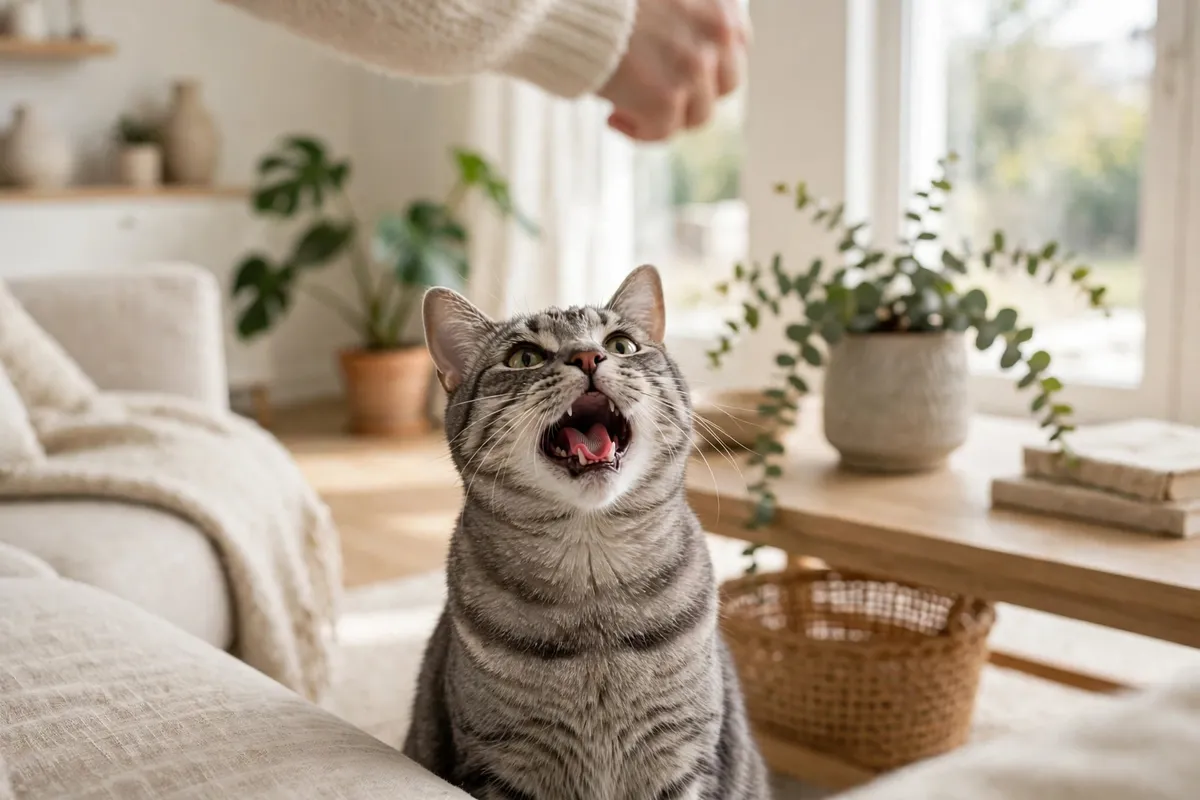
Your cat walks into the room, looks up at you, and lets out a soft, rolling "brrrp" or "prrrt" — not quite a meow, not quite a purr. That sound is called a trill, and it is one of the friendliest noises a cat can make. In short, cats trill to greet people they like, to invite you to follow them, to ask for attention or food, and to share excitement. It is a social sound, learned in kittenhood and kept for life, and it almost always means your cat feels comfortable around you.
If you have ever wondered whether that chirpy little greeting means something different from a regular meow, you are not alone. Many cat owners hear trilling every day without realizing how much information is packed into such a short sound. In this guide, we break down what a trill is, its six most common meanings, how it differs from chirping and chattering, and how to respond in a way your cat understands.
What Does a Cat Trill Sound Like?
A trill is a short, musical sound made with the mouth closed or only partly open — a rolled "r" like "brrrp" or "prrrt," with the pitch rising slightly at the end, almost like a question. Unlike a longer, open-mouthed meow, a trill is quick, soft, and gentle, and it often comes with relaxed body language: ears forward and tail held high.
Kittens first learn to trill from their mother, who uses it to call them, guide them to food, and reassure them as they explore. Many adult cats keep using the same sound with their favorite humans — when your cat trills at you, it is treating you a little like family.
1. A Happy Greeting: "Hello, It's You!"
The most common meaning of a trill is a simple, cheerful hello. Cats often trill when you come home, when you walk into a room they are already in, or when they wake up from a nap and spot you. It is the feline equivalent of waving and saying "hi" — warm, brief, and unmistakably positive. You may notice that the trill comes with a tail held high, a slow blink, or a quick rub against your leg, all of which point to the same friendly message.
Some cats trill every time they see you; others save it for the first greeting of the morning. Either pattern is normal, and both are a good sign that your cat feels safe and enjoys your company.
2. An Invitation to Follow: "Come With Me"
Another classic trill moment happens when your cat walks a few steps, looks back over its shoulder, trills, and then keeps walking. This is a follow-me invitation. Mother cats do exactly the same thing with kittens, trilling to lead them from one place to another. Your cat may be leading you toward its food bowl, toward a favorite toy, toward a sunny windowsill, or simply toward the room where it wants to hang out with you.
Follow the invitation at least sometimes. If you ignore it every time, your cat may stop asking. Getting up once in a while to see what it wants shows your cat that its communication works, and that is how trust grows.
3. A Polite Request for Attention, Food, or Play
Cats are famously good at training their humans, and the trill is one of their politest tools. A cat that trills while weaving around your ankles near mealtime is probably asking for dinner. A cat that trills while carrying a toy mouse to your feet is asking for play. And a cat that trills, then flops down and shows its belly, is often asking for a gentle chin scratch or a quiet moment together.
What sets the trill apart from a demanding meow is its tone: trills stay soft and conversational, like asking nicely rather than insisting. Responding with attention, a treat, or a short play session rewards that calm, friendly way of asking.
4. Mother-Kitten Talk That Never Really Stops
Even cats that never had kittens of their own often keep using trills the way a mother cat would. Female cats in particular may trill at kittens, at smaller cats, or at their human family members as a form of gentle guidance and reassurance. You might hear it when your cat is settling down next to you for a nap, when it is checking on a sleeping kitten, or when it is coaxing a shy housemate out of hiding.
This caring use explains why the sound feels so warm. It is not a warning or a demand for territory — it is a cat saying, in effect, "I am here, everything is fine." Cats that trill this way are often the social glue of a multi-cat household.
5. Excitement and Playfulness
Trills also pop up when a cat is excited. A cat that spots a feather toy, watches a bird land on a fence, or gets ready for a game of chase may let out a quick, chirpy trill as part of its playful energy. In this context, the trill is often faster and higher-pitched than a greeting trill, and it comes with dilated pupils, a twitching tail, and a crouched, ready-to-pounce posture.
This excited trill is related to chirping and chattering, but a play trill is loose and happy, while a frustrated chatter is sharper and more repetitive. If your cat trills during play, it is enjoying itself — keep the game going a little longer.
6. A Soft Complaint or Moment of Uncertainty
Not every trill is pure joy. Sometimes a cat trills in a slightly lower, questioning tone when it is mildly unsure — for example, when it is asked to do something it does not want to do, when it is gently picked up, or when it is waiting for something that is taking too long. This version of the trill sounds a bit like "brrrp?" with a rising note at the end, as if your cat is asking, "Really? Are we doing this?"
A questioning trill is still a long way from hissing or growling. It is a polite protest that usually stops as soon as the situation changes — if your cat trills this way when picked up, try putting it down and letting it come to you instead.
Trill vs Meow vs Chirp vs Chatter: How to Tell Them Apart
Cat sounds can blend together, so here is a simple way to separate them. A meow is a longer, open-mouthed vocalization that adult cats mostly use with humans, and it can range from a soft request to a loud demand. A purr is a low, continuous vibration that usually signals contentment, though cats also purr when they are nervous or in pain. A chirp is a short, high-pitched "chirp-chirp" sound, often aimed at birds or small animals outside the window. A chatter is a rapid, jaw-trembling clicking sound made when a cat watches prey it cannot reach.
A trill, by contrast, is rolling, musical, and social, almost always directed at another cat or a trusted person, with relaxed, forward-facing body language. If the sound is short, rolling, and friendly, you are almost certainly hearing a trill — one of the clearest "I like you" signals a cat has.
Should You Trill Back? How to Respond
Yes — trilling back is one of the simplest ways to bond with your cat. Try making a soft, rolling "brrrp" sound when your cat trills at you, or simply answer in a warm, gentle voice. Many cats will trill again in reply, turning a single greeting into a short back-and-forth conversation. It may feel silly the first time, but to your cat, it is a genuine exchange, and cats that get a reply often trill more often.
You can also answer with body language cats understand: a slow blink, a relaxed posture, a gentle chin scratch, or simply following your cat when it invites you. Avoid loud voices or sudden movements right after a greeting trill, which can turn a friendly moment into a startling one.
When a Trill Is Worth a Second Look
Trilling on its own is almost never a cause for concern, and most cats trill their whole lives without any problem at all. What matters is change. If a cat that has always been chatty suddenly goes silent, or if a quiet cat suddenly starts vocalizing a lot more than usual, that shift is worth paying attention to — especially if it comes with other changes such as eating less, drinking more, hiding, sleeping far more than usual, or coughing and sneezing.
The same applies to the sound itself: a trill that suddenly turns hoarse or strained should be checked by a veterinarian, since respiratory infections and throat irritation can change a cat's voice. In most cases, though, a trill is simply good news — your cat is talking to you because it likes you and wants you nearby.
Frequently Asked Questions
Do all cats trill?
No. Trilling is common but not universal. Some cats trill often, some rarely, and some never do. A cat that does not trill is not unhappy — it simply communicates in other ways, such as meowing, purring, or headbutting.
Is a trill the same as a chirp?
They are close cousins. A trill is a soft, rolling, musical sound made with a closed or partly closed mouth, often like a "brrrp" or "prrrt". A chirp is usually shorter and sharper, and is often aimed at birds or prey through a window.
Why does my cat trill at me but not at other people?
Cats often reserve their friendliest sounds for their favorite person. If your cat trills at you, it usually means it associates you with safety, food, play, and affection — you are its chosen human.
Should I trill back at my cat?
Yes — many cats respond happily when their owner trills or talks back softly. It will not confuse your cat, and it often strengthens your bond. Just keep your voice gentle and relaxed.
When should I worry about my cat trilling?
Trilling itself is almost always normal. Worry only if the sound changes suddenly along with other changes — loss of appetite, hiding, lethargy, coughing, or difficulty breathing — in which case a vet visit is wise.