Why Does My Cat Twitch in Its Sleep?
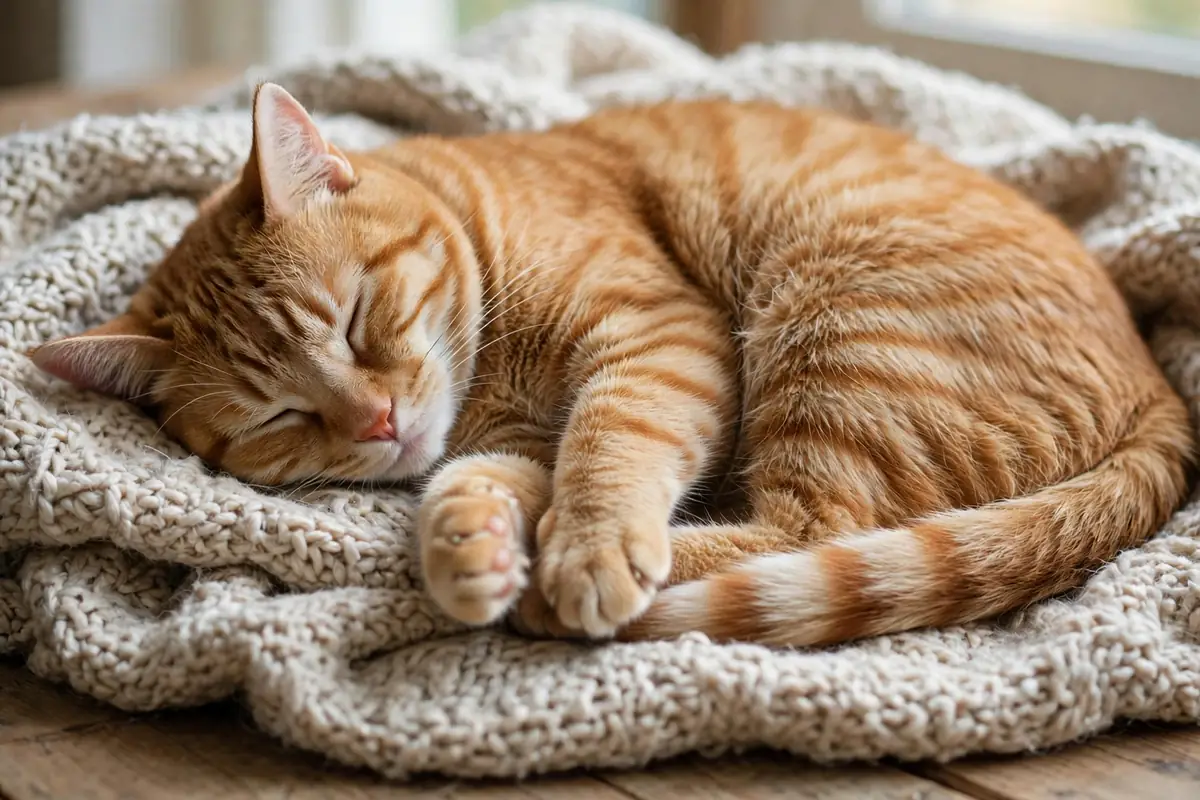
If you have ever watched your sleeping cat's paws twitch, its whiskers flicker, or its ears wiggle as if it were chasing something in a dream, you have seen a completely normal part of cat sleep. Cats twitch in their sleep because they dream, and during dream sleep the brain sends out small bursts of movement that show up as twitches in the paws, legs, face, and whiskers. It is the same kind of sleep twitching you see in dogs and people, and in a healthy cat it is nothing to worry about.
The important thing is knowing what normal sleep twitching looks like and how it differs from a seizure, because the two can look similar at a glance and they mean very different things. A dreaming cat twitches gently, stays relaxed, and wakes up normally. A cat having a seizure is stiff, does not respond, and is confused or unsteady afterwards. This guide explains why cats twitch in their sleep, what dreaming cats are doing, and the clear signs that separate a dream from a seizure.
Why Do Cats Twitch in Their Sleep?
Cats twitch in their sleep because of the way their brains work during dream sleep. Like people, cats cycle through stages of sleep, including a deep stage called REM sleep, where the brain is highly active and dreams happen. During REM sleep, the brain sends movement signals to the body, and because the muscles are mostly relaxed, those signals come out as small twitches: a paw paddling, a whisker flicking, an ear wiggling, or a quick flick of the tail.
These twitches are a sign that your cat's brain is doing its normal overnight work, processing the day's experiences and keeping its reflexes sharp. Kittens twitch more than adult cats, partly because their nervous systems are still developing and partly because they spend more time in REM sleep. Senior cats may twitch less as their sleep patterns change, though many still dream actively throughout their lives. Either way, gentle twitching in a sleeping cat is a healthy sign, not a problem.
Do Cats Dream? What Happens During Cat REM Sleep
The evidence strongly suggests that cats do dream. During REM sleep, a cat's brain shows the same kind of active patterns seen in dreaming humans, and its eyes move quickly behind closed lids, just as ours do. Researchers who have studied cat sleep have observed cats in REM sleep moving their paws, lifting their heads, and acting as if they were stalking, pouncing, or playing, all while sound asleep. It looks very much like a cat replaying the day.
What do cats dream about? Nobody can know for certain, but the movements give clues. A cat that paddles its paws may be dreaming of running or chasing a toy, a cat that flicks its ears may be dreaming of listening for a sound, and a cat that twitches its whiskers may be dreaming of exploring a new corner of the house. The most likely answer is that cats dream about the things they do while awake: hunting, playing, eating, and spending time with you. It is a comforting thought, and the science supports it.
What Twitching Looks Like in a Dreaming Cat
Normal sleep twitching is gentle and brief. You will usually see small movements in the paws, as if your cat is kneading or running in slow motion, along with flickers of the whiskers, ears, or eyelids. Your cat may make soft sounds too: a quiet chirp, a little squeak, or a muffled meow. The body stays relaxed and loose, and the twitches come and go in short bursts before the cat settles still again or shifts into a deeper, quieter sleep.
These episodes usually last seconds to a minute or two, and they happen most often when your cat is deeply asleep, curled up or stretched out, with its eyes closed and its breathing slow and even. Kittens are the most dramatic dreamers, with bigger twitches and more frequent episodes, and they often twitch through most of a nap. If your cat's twitching matches this picture, you can simply enjoy watching it. A dreaming cat is a contented cat.
Cat Twitching in Sleep vs Seizure: How to Tell the Difference
The difference between a dream and a seizure is one every cat owner should know, because it decides whether your cat needs a vet urgently. During a dream, the twitches are small, the body stays loose, and your cat wakes up easily if you speak softly or touch it gently. It wakes up alert, stretches, and carries on as normal. A seizure looks very different: the whole body stiffens or jerks violently, the legs paddle hard, the cat may drool or lose bladder control, and it does not respond to your voice or touch.
Duration is another clue. Dream twitches last seconds to a couple of minutes at most and come in gentle bursts. A seizure usually lasts longer, involves the whole body rather than just the paws or face, and is followed by confusion: the cat may be wobbly, disoriented, or unusually clingy or withdrawn for a while afterwards. If you ever see full-body stiffening and jerking with no response, do not restrain your cat, keep your hands away from its mouth, move nearby objects out of the way, and call your vet as soon as the episode ends.
Should You Wake a Twitching Cat?
In almost every case, no. A twitching cat is dreaming, and waking it up interrupts a normal, healthy process. Cats need their sleep, including dream sleep, and a cat that is woken from a dream may be startled or grumpy, just like a person woken from a deep sleep. Let your cat dream in peace, and enjoy the show quietly from a distance.
There are two exceptions. If the twitching looks like a seizure, with a stiff body, hard jerking, and no response, you should stay nearby and be ready to help once it passes, but do not try to wake or hold the cat during the episode. And if your cat seems distressed in its sleep, crying out or thrashing in a way that looks like a nightmare, you can wake it very gently by speaking softly or touching it lightly, then offering comfort when it wakes. Most of the time, though, the kindest thing you can do for a twitching cat is nothing at all.
Frequently Asked Questions
Is it normal for cats to twitch in their sleep?
Yes, it is completely normal. Cats twitch during REM dream sleep, when the brain sends small movement signals to the paws, whiskers, and ears. Gentle twitching in a relaxed, sleeping cat is a healthy sign, and kittens twitch even more because they spend more time in dream sleep.
Do cats dream about their owners?
Nobody can know for certain, but the evidence suggests cats dream about their daily lives, which includes hunting, playing, eating, and the people they spend time with. During REM sleep, cats move as if they are stalking or playing, so it is likely that familiar people and routines feature in their dreams.
Why does my kitten twitch so much in its sleep?
Kittens twitch more than adult cats because their nervous systems are still developing and they spend a larger share of sleep in the REM dreaming stage. Their twitches are often bigger and more frequent, and they may paddle their paws or flick their ears through most of a nap. This is normal and healthy in a kitten.
How can I tell if my cat is having a seizure in its sleep?
A dream involves gentle twitches, a relaxed body, and a cat that wakes up normally. A seizure involves the whole body stiffening or jerking hard, drooling or loss of bladder control, and no response to your voice or touch, followed by confusion or unsteadiness. If you see that, do not restrain your cat and call your vet once it passes.
Should I wake my cat up if it seems to be having a bad dream?
Usually it is best to let a dreaming cat sleep, even if it twitches or makes soft sounds. If your cat is crying out or thrashing as if distressed, you can wake it gently by speaking softly or touching it lightly, then comfort it when it wakes. Never grab or shake a sleeping cat, and never wake a cat mid-seizure.