Can Cats Drink Coffee?
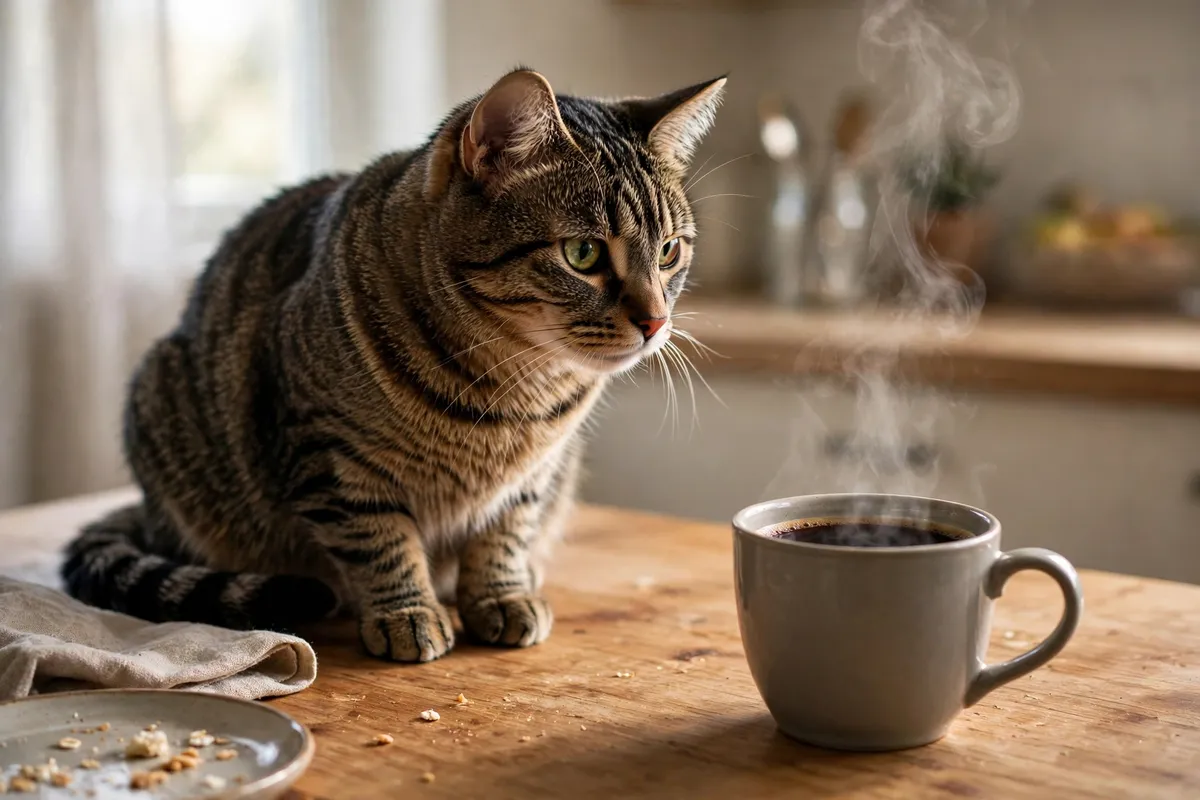
No — cats should never drink coffee. Coffee contains caffeine, a stimulant that cats cannot process safely, and even a few laps from a mug can make a cat ill. There is no antidote for caffeine poisoning in cats, which is why prevention and a fast call to the vet matter so much. The same warning covers coffee grounds, tea, and energy drinks.
This guide explains why caffeine is dangerous for cats, how the risk changes with the type and amount, why decaf is not a safe workaround, and exactly what to do if your cat drinks coffee. It also covers kittens, who are at greater risk than adult cats.
The Verdict: Can Cats Drink Coffee?
Verdict: UNSAFE. Coffee is toxic to cats because of its caffeine content, and it should never be offered in any amount. Caffeine stimulates a cat's nervous system and heart, and cats break it down far more slowly than people do, so the effects last longer and hit harder in a small animal. There is no safe portion of coffee for a cat — not a lap, not a sip, not a splash in milk.
If your cat has drunk coffee, or eaten or drunk anything containing caffeine, contact your veterinarian or a pet poison helpline immediately, even if your cat looks fine. There is no antidote for caffeine poisoning, so treatment focuses on supporting your cat while the caffeine clears — and the sooner that support starts, the better the outcome.
Why Coffee Is Dangerous for Cats
Coffee's danger is caffeine, a stimulant that speeds up the nervous system and the heart. A person can drink several cups a day without trouble, but a cat's body handles caffeine very differently: cats metabolise it slowly, so a single exposure stays active for a long time, and their small body weight means a few laps from a mug is a large exposure.
Affected cats may become restless and agitated, vomit, develop diarrhea, drink and urinate more than usual, and show a racing heartbeat. In serious cases, the effects progress to muscle tremors, seizures, and dangerous heart rhythm problems. Because there is no antidote, veterinarians treat caffeine exposure by supporting the cat — fluids, monitoring, and medicines to control the heart rate and tremors.
Coffee is also a risk in forms many owners do not think of: grounds, espresso, cold brew, and coffee-flavoured foods all contain caffeine, and a cat that chews a used coffee filter or licks spilled grounds takes in a concentrated dose. Cats are not usually drawn to coffee, but a curious cat may still lap at a mug left on a low table, especially a milky coffee that smells of milk.
How Much Coffee Is Dangerous for a Cat?
There is no known safe amount of coffee for a cat, and you should never try to work out a safe dose at home. The danger depends on the same three factors as with chocolate: a smaller cat, a stronger or more concentrated product, and a larger amount all mean more danger. A few laps of weak milky coffee is a smaller exposure than a mouthful of espresso or a spoonful of grounds — but none of them is safe, and any ingestion warrants an immediate vet call.
Several sources of caffeine are easy to overlook, and all of them count:
- Coffee grounds and beans. Far more concentrated than brewed coffee. Used grounds in a bin, a filter, or a compost heap are a serious risk, and chocolate-covered coffee beans combine caffeine with chocolate.
- Espresso and cold brew. Stronger than a regular cup of coffee, so a small amount carries a larger caffeine load.
- Tea and tea bags. Black and green tea contain caffeine too, and a chewed tea bag delivers a concentrated amount.
- Energy drinks and caffeine pills. Highly concentrated and extremely dangerous for cats — keep them in a closed cupboard.
- Soft drinks and chocolate. Some cola drinks contain caffeine, and chocolate contains both caffeine and theobromine, so a cat that drinks cola or eats chocolate faces a double stimulant exposure.
Tell your vet what your cat drank or ate, roughly how much, and when.
Is Coffee Safe for Cats? The Decaf Question
Coffee is not safe for cats in any form, and decaf is not a safe workaround. Decaffeinated coffee still contains a small amount of caffeine — less than regular coffee, but not none — and a cat's body is so sensitive to caffeine that even a reduced amount is not something to offer on purpose. Decaf also brings the same practical problems as regular coffee: it is a hot drink that can scald, and milky or sweetened coffee adds milk, sugar, and fat a cat does not need.
The same goes for flavoured coffee drinks. A latte, a mocha, or a sweetened iced coffee may smell of milk and sugar, which can tempt a cat to lap at it — but the caffeine is still there, and a mocha also contains chocolate. Keep all coffee drinks, decaf included, in a lidded mug or well out of reach.
What should your cat drink instead? Fresh water, and nothing else — clean water, changed daily, in a clean bowl is all a healthy cat needs. Our guide to whether cats can drink milk explains why even milk is not the treat many owners assume it is.
Can Kittens Drink Coffee?
No — kittens should never drink coffee, and they are at greater risk than adult cats. A kitten's body is tiny, so the same few laps from a mug deliver a much larger exposure relative to its weight, and its developing nervous system and heart are more easily disturbed by caffeine. An amount that might cause only mild stomach upset in a large adult cat can cause serious signs in a kitten.
Kittens are also the most likely to get into coffee by accident, because they climb onto counters and investigate mugs, cups, and open bins. Keep coffee mugs in a lidded travel cup or well back from the edge of a table, and empty used grounds straight into a closed bin. A kitten's only drink should be fresh water alongside a complete kitten food.
What Happens If My Cat Drinks Coffee?
Signs of caffeine poisoning usually appear within a few hours. Early signs often involve the stomach and behaviour: vomiting, diarrhea, restlessness, agitation, and drinking and urinating more than usual. A cat may pace, seem unable to settle, or become unusually vocal.
More serious signs reflect the stimulant effect on the heart and nervous system: a racing heartbeat, rapid breathing, muscle tremors, and seizures all need emergency veterinary care at once. In the most serious cases, caffeine poisoning can cause dangerous heart rhythm problems and collapse.
If your cat drank coffee along with other ingredients, mention them all to your vet. Our guide to why chocolate is toxic to cats explains the same principle: stimulant foods overlap, and your vet needs the full picture.
What to Do If Your Cat Already Drank Coffee
Work through these steps in order:
- Take the coffee away so your cat cannot drink more, and note what it was — brewed coffee, espresso, grounds, tea, or an energy drink — and roughly how much was taken and when.
- Call your veterinarian or a pet poison helpline immediately. Do not wait for symptoms. Give your cat's age, weight, and any health conditions, plus exactly what was drunk or eaten.
- Do not try to make your cat vomit at home. Never give hydrogen peroxide, salt water, or any home remedy — these can cause serious harm, and vomiting should only be induced by a veterinarian.
- Do not give human medicines. Painkillers such as paracetamol and ibuprofen are toxic to cats.
- Keep your cat calm and warm in a quiet room and watch their breathing. If your cat has a seizure or collapses, get to an emergency vet immediately.
- Follow your vet's instructions. They may ask you to come in for examination and monitoring, even if your cat looks well.
For more on keeping your cat safe around the kitchen, see our guide to when cat vomiting is a worry, explore the full Cat Food section, and visit the Purrfect Paws homepage for the latest articles.
Frequently Asked Questions
Can cats drink coffee?
No. Coffee is toxic to cats because it contains caffeine, which cats process very slowly. Even a few laps from a mug can cause vomiting, restlessness, tremors, and heart rhythm problems.
Can kittens drink coffee?
No. Kittens are at greater risk because they are smaller and their nervous systems are still developing. Keep all coffee, grounds, and mugs well out of a kitten's reach.
What happens if my cat drinks coffee?
Signs can include vomiting, diarrhea, restlessness, increased thirst and urination, a racing heartbeat, tremors, and in serious cases seizures and heart rhythm problems. There is no antidote, so call your vet immediately.
How much coffee can a cat drink?
There is no safe amount of coffee for a cat. Stronger coffee, grounds, and energy drinks are more dangerous than weak coffee, but any caffeine ingestion warrants an immediate call to your vet or a pet poison helpline.
Can cats drink decaf coffee?
No. Decaf coffee still contains a small amount of caffeine, and it is not a safe drink for cats. Fresh water is the only drink a healthy cat needs.