Can Cats Eat Chickpeas?
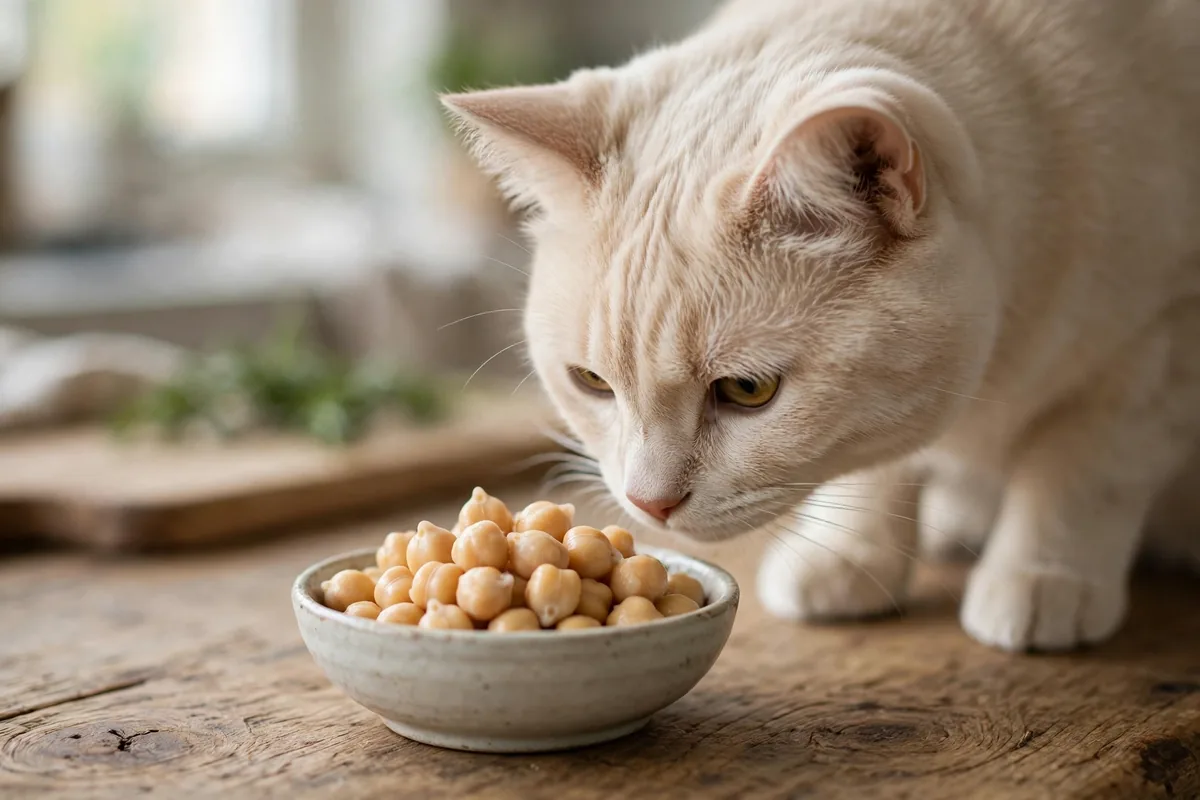
Yes, cats can eat chickpeas — but only plain, fully cooked chickpeas, and only two or three at a time. Chickpeas themselves are not toxic to cats, so a couple of plain boiled chickpeas are usually harmless for a healthy adult cat. The problem is not poison, it is digestion: cats are obligate carnivores, and their stomachs are not built to break down plant foods the way ours are. A few chickpeas can ferment in the gut and leave your cat gassy, bloated, and uncomfortable for hours.
This guide explains why plain chickpeas are mostly harmless in tiny amounts, why hummus is a completely different story, and what to do if your cat has already had a taste.
The Verdict: Can Cats Eat Chickpeas?
Verdict: CAUTION. Plain cooked chickpeas are not toxic to cats, and two or three offered occasionally are harmless for a healthy adult cat. But chickpeas are hard for a cat to digest, and a larger portion can cause gas, bloating, stomach cramps, and loose stools.
Offer chickpeas only when they are fully cooked, completely plain — no salt, no spices, no sauce, no seasoning — and only two or three at a time, mashed so they are easy to swallow. The moment they come as hummus, from a curry, a salad, or a seasoned snack, they stop being shareable.
Why Chickpeas Are Not Toxic but Are Not Cat Food Either
Chickpeas contain nothing that is poisonous to cats. They are a legume, rich in plant protein, fiber, and folate, and they are a genuinely healthy food — for humans. For a cat, though, "healthy for us" does not mean "useful for them." Cats evolved to get their nutrition from animal tissue, and their digestive system has a short gut and limited enzymes for breaking down plant starches and fiber.
That mismatch shows up quickly. A cat that eats chickpeas gets very little usable nutrition from them: the protein is plant protein, which lacks the amino acid balance cats need, and the fiber that is so good for human digestion is exactly what ferments in a cat's gut and produces gas. Chickpeas are not dangerous in small amounts, but they are also not food in any meaningful sense for a cat — they are a filler, and they should stay a rare, tiny extra.
Hummus Is Out: Garlic, Lemon, Tahini, and Salt
Most of the time a cat encounters chickpeas, it is not as plain boiled chickpeas — it is as hummus. And hummus is not safe for cats. The chickpea itself is the least of the problem; it is everything else in the bowl that makes hummus off-limits.
Here is what a typical hummus contains, and why each ingredient is a problem:
- Garlic. The most serious ingredient. Garlic is toxic to cats — it can damage red blood cells and cause weakness, vomiting, and breathing problems, even in small amounts. Some recipes use raw garlic, which is stronger still.
- Lemon juice. Citrus is acidic and irritating to a cat's mouth and stomach, and the essential oils in citrus can cause vomiting and diarrhea.
- Tahini. A thick sesame paste that is very high in fat and calories. A cat's stomach handles rich, fatty foods poorly, and tahini adds a heavy fat load for no nutritional benefit.
- Salt. Store-bought and homemade hummus are both salted, and a cat's small body handles excess sodium poorly — extra thirst and stomach upset are the usual signs.
- Spices and olive oil. Cumin, paprika, and other spices can irritate a cat's stomach, and the added oil piles on fat a cat does not need.
A single lick of hummus is not usually an emergency, but it should never be offered on purpose. If your cat licks some hummus, watch them for vomiting or lethargy over the next day and call your vet if you see warning signs. The rule is simple: plain chickpeas only, and hummus stays on your plate.
The Main Risk: Gas, Cramping, and Tummy Trouble
The biggest risk with plain chickpeas is not toxicity — it is digestive discomfort. Chickpeas are high in fiber and contain complex sugars called oligosaccharides that the body struggles to break down. In humans, that means a little extra gas. In cats, whose digestive systems are even less equipped for plant fiber, the same effect is stronger: gas, bloating, a gurgling stomach, and painful cramping.
A cat that has eaten too many chickpeas may hide, crouch, or refuse to move comfortably. You may notice a swollen-looking belly, soft or loose stools, or your cat passing gas more than usual. In most cases these signs pass within a day, but they are a clear signal that the food did not agree with your cat.
Raw or undercooked chickpeas are a separate and more serious risk. Uncooked chickpeas are hard, tough, and very difficult to digest, and they contain lectins — natural compounds that can irritate the gut and cause vomiting and diarrhea. Always cook chickpeas until they are completely soft before even considering a taste for your cat, and never serve chickpeas that are still firm or crunchy.
Is Chickpeas Safe for Cats?
Plain cooked chickpeas are safe for most healthy adult cats in tiny amounts — two or three, occasionally, with nothing added. They are not toxic, and a small taste will not harm a healthy cat. But "safe in a tiny amount" is very different from "a good food for cats," and chickpeas fall firmly in the first category.
They are not safe in every form. Raw chickpeas, undercooked chickpeas, roasted and salted snack chickpeas, and chickpeas from seasoned dishes are not safe to share. Chickpea curry is usually seasoned with onion, garlic, and spices, and roasted chickpea snacks are coated in salt and flavoring. If the chickpeas have anything on them, keep them away from your cat. Cats with a sensitive stomach or any ongoing digestive problem should not eat chickpeas at all — check with your vet first.
Can Kittens Eat Chickpeas?
No — kittens should not eat chickpeas. A kitten's stomach is small and very sensitive, and the fiber in chickpeas is far more likely to cause gas, cramping, and diarrhea in a young cat than in an adult. Kittens also have a much smaller margin for error: a food that only causes mild discomfort in an adult can cause dehydration in a kitten if it leads to diarrhea.
Kittens are also growing fast, and every bite counts. They need a complete kitten food that is rich in animal protein and calories, and chickpeas take up room in a tiny stomach without giving them any of the nutrients they need. Wait until your cat is a healthy adult before offering even a couple of plain cooked chickpeas, and even then, keep it rare.
How Much Chickpeas Can a Cat Eat?
If you share chickpeas at all, keep it to two or three plain, cooked chickpeas, offered occasionally — not daily, and never a handful. Mash the chickpeas so they are soft and easy to swallow, and serve them at room temperature with nothing added: no salt, no butter, no spices, no sauce.
Watch your cat over the next day. If you see gas, bloating, soft stools, or a skipped meal, their stomach did not appreciate it, and chickpeas should stay a one-time experiment.
What Happens If My Cat Eats Chickpeas?
If the chickpeas were plain and fully cooked and the amount was small, almost certainly nothing. A larger portion is more likely to cause gas, bloating, stomach cramps, and soft stools over the next few hours — uncomfortable, but usually passing within a day.
The more serious case is hummus or seasoned chickpeas. Watch for repeated vomiting, diarrhea that lasts more than a day, refusal to eat or drink, lethargy, or weakness — especially if the hummus contained garlic. Garlic can take a day or two to show its effects, so keep watching even if the first day seems fine. If your cat ate hummus, call your vet and tell them exactly what was in it.
What to Do If Your Cat Already Ate Chickpeas
Work through these steps:
- Take the bowl or plate away so your cat cannot eat more, and work out what kind of chickpeas they were — plain and cooked, raw, seasoned, or as hummus.
- Offer fresh water and let your cat drink freely, especially if the chickpeas were salted or served as hummus.
- Watch for 24 to 48 hours. Mild gas, one soft stool, or a single vomit usually settles on its own. Keep your cat comfortable and let their stomach rest. Garlic effects can be delayed, so keep watching even if the first day seems fine.
- Call your vet right away if you see repeated vomiting, diarrhea lasting more than a day, refusal to eat or drink, weakness, pale gums, or if the chickpeas were hummus or a dish seasoned with onion or garlic, or if the eater was a kitten.
- Note what happened — the type of chickpeas or hummus, how much your cat ate, and when — so you can give your vet clear information.
Never try to make your cat vomit at home unless your vet specifically tells you to. For more on safe snacks, see our guides to whether cats can eat cheese and whether cats can eat popcorn, or browse the full Cat Food section on the Purrfect Paws homepage.
Frequently Asked Questions
Is chickpeas safe for cats?
Plain cooked chickpeas are safe for most healthy adult cats in tiny amounts. They are not toxic, but they are hard to digest and offer a cat almost nothing useful, so they should stay an occasional treat.
Can kittens eat chickpeas?
No. Kittens should not eat chickpeas — their small stomachs are very sensitive to fiber, and gas and cramping are more likely. Kittens need a complete kitten food, not human foods.
What happens if my cat eats chickpeas?
A few plain cooked chickpeas usually cause no trouble. A larger amount can cause gas, bloating, stomach cramps, soft stools, or diarrhea. Hummus is the serious case — garlic and salt can cause vomiting and weakness, so call your vet if your cat ate hummus.
How much chickpeas can a cat eat?
Two or three plain cooked chickpeas, offered occasionally, is plenty. Mash them and serve them without salt, seasoning, or sauce — that small amount is enough for a taste without overloading your cat's stomach.
Can cats eat hummus?
No. Hummus is not safe for cats. It is made with garlic, lemon juice, tahini, and salt — garlic is toxic to cats, and the salt and acidity can upset a cat's stomach. Only plain chickpeas with nothing added are shareable.